Best AI Tools for Data Analytics in Australia 2025

Curious about the best AI tools for data analytics? In 2025, Australian businesses and analysts increasingly rely on intelligent platforms that automate insights, speed up workflows, and enhance decision-making. But with so many options from cloud-native suites to niche utilities, knowing where to start can be overwhelming.
This guide breaks down the most powerful AI-driven data analytics tools today, what they excel at, and how to decide which fits your needs.
What Makes an AI Analytics Tool “Best”?
Not every tool with “AI” in its name delivers real value. The best AI tools have these qualities:
Automated insights: Extracting anomalies, trends, or correlations without manual coding.
Augmented analytics: Enabling users to query via natural language or AI assistants.
Scalability: Handling large datasets efficiently, whether on your desktop or in the cloud.
Ease of implementation: Provide integrations with SAP, Excel, Snowflake, etc.
Clear ROI: Helping translate data into business impact quickly.
With that in mind, let’s explore the top picks.
Top AI Tools for Data Analytics in 2025
1. Microsoft Power BI + CoPilot
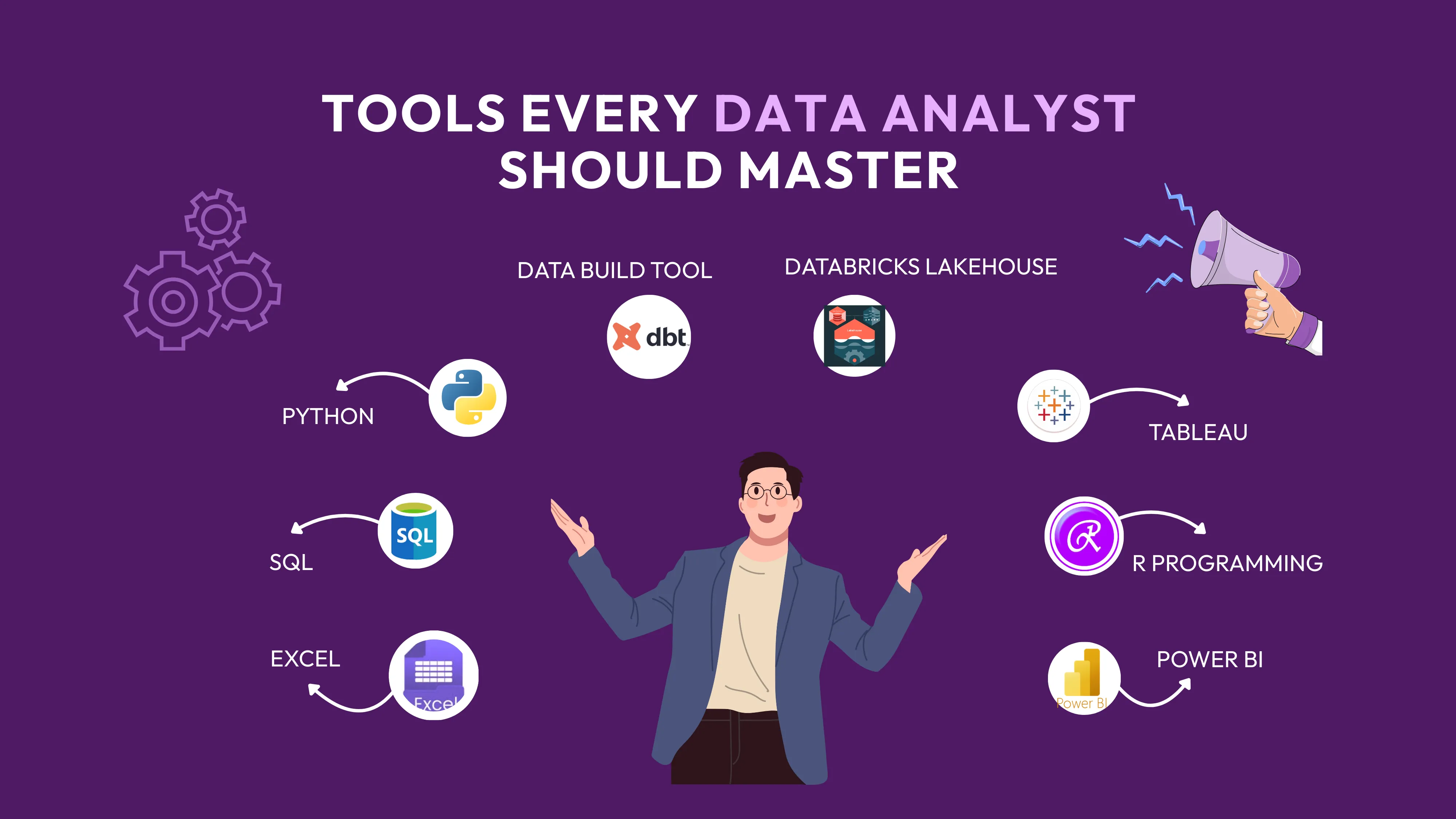
Microsoft has built AI capabilities directly into Power BI, thanks to CoPilot. Analysts can now ask questions in natural language, like “Show me last quarter’s top five customers,” and receive instant visualisations. This fusion of classic BI and AI makes it one of the best AI tools for data analytics, especially in enterprise environments.
2. Tableau + Einstein Discovery
Tableau’s integration with Salesforce’s Einstein Discovery brings predictive modeling and prescriptive suggestions into your dashboards. It can automatically detect patterns (e.g., customer churn risks) and recommend next steps, without needing specialist knowledge. For teams already using Tableau, this is a seamless AI upgrade.
3. Google Data Studio + Looker ML
Google’s Looker integrates machine learning models in dashboards you build on Data Studio. It excels at embedding AI insights, like predictive scoring, regression analysis, or anomaly detection, into operational reporting. It's a powerful combo for analysts working with Google Cloud data warehouses.
4. Alteryx Designer Cloud
Alteryx has long been a favorite for drag-and-drop analytics. Its modern platform now includes AI-powered anomaly detection, auto-model suggestions, and generative analytics. For teams aiming to automate complex workflows without coding, Alteryx remains hard to beat.
5. Open-Source + Python Toolkits
For technical users, open-source Python libraries like pandas, scikit-learn, and Auto-Sklearn let you build customised AI analytics pipelines. Combined with cloud tools like Vertex AI or AWS SageMaker, they’re extremely powerful but require technical knowledge and setup.
How to Choose the Right AI Analytics Tool
A. Match It to Your Use Case
Fast insight generation? Go with Power BI + CoPilot or Tableau + Einstein.
Prescriptive analytics or predictive scoring? Einstein Discovery or Looker ML fits best.
Automated workflows and prep? Alteryx shines here.
Custom modeling? Use Python-based toolkits.
B. Consider Your Tech Stack
What’s already in your environment? Your choice should align with existing tools (e.g. Microsoft, Google Cloud, AWS), data storage, and team skill sets.
C. Plan for Upskilling
Even AI tools require proper design and governance. Users will benefit from training, tutorials, or mentorship to get the most from dashboards and models.
Why Mentorship Accelerates Successful Adoption
It’s not enough to deploy AI tools, you need a strategic rollout. Having a mentor who understands both analytics and AI can:
Help you choose tools that fit your current skill level and ambitions
Guide you in building your first AI-powered dashboard or model
Offer feedback on governance, visualization, and interpretation
Support your career transition (e.g., from analyst to AI data lead)
A Trusted Resource to Learn More
For a deeper understanding of differences between AI-powered BI platforms, consider getting mentored by a professional AI mentor.
Final Takeaway: Use AI Intelligently
The best AI tools for data analytics aren’t just flashy; they integrate smoothly, democratise insights, and help produce measurable outcomes. Whether you lean towards Power BI, Tableau, Alteryx, or custom Python stacks, choosing a tool that matches your workflow and has learning support behind it is key.
Want Expert Guidance?
Book a session with an AI or Data mentor at Emergi Mentors to tailor tool selection, build your first AI dashboard, and move forward faster with strategy and accountability.