Is Data Analyst a Good Career in Australia? (2026 Verdict)


For many graduates and data professionals, data analytics is known to be one of Australia's dominant career choices in 2026. It is expected to see 23–27% employment growth over the next five years. Salaries can range from $90K to $160K+ depending on experience and city, and the field is resilient to the AI disruption which is affecting adjacent roles. But entry-level competition has also tightened, and the candidates' landing jobs now are the ones with portfolios, not just certificates.
If you have been considering a career move into data analytics or wondering whether your current data role has a future, you are asking the right question at the right time. Australia’s data analytics market is in a growth cycle and businesses across banking, healthcare, government, retail, and logistics are competing for a limited number of skilled analysts.
Another factor is AI, which is increasing the demand for data analysts who can interpret, contextualise, and communicate data insights, as AI tools can now automate most of the repetitive parts of the job. Now let’s see the unfiltered 2026 picture: verified salary data, real job growth numbers, honest pros and cons, and a clear view of what it takes to get hired in Australia right now.
Data Analyst Salary in Australia (2026 Data)
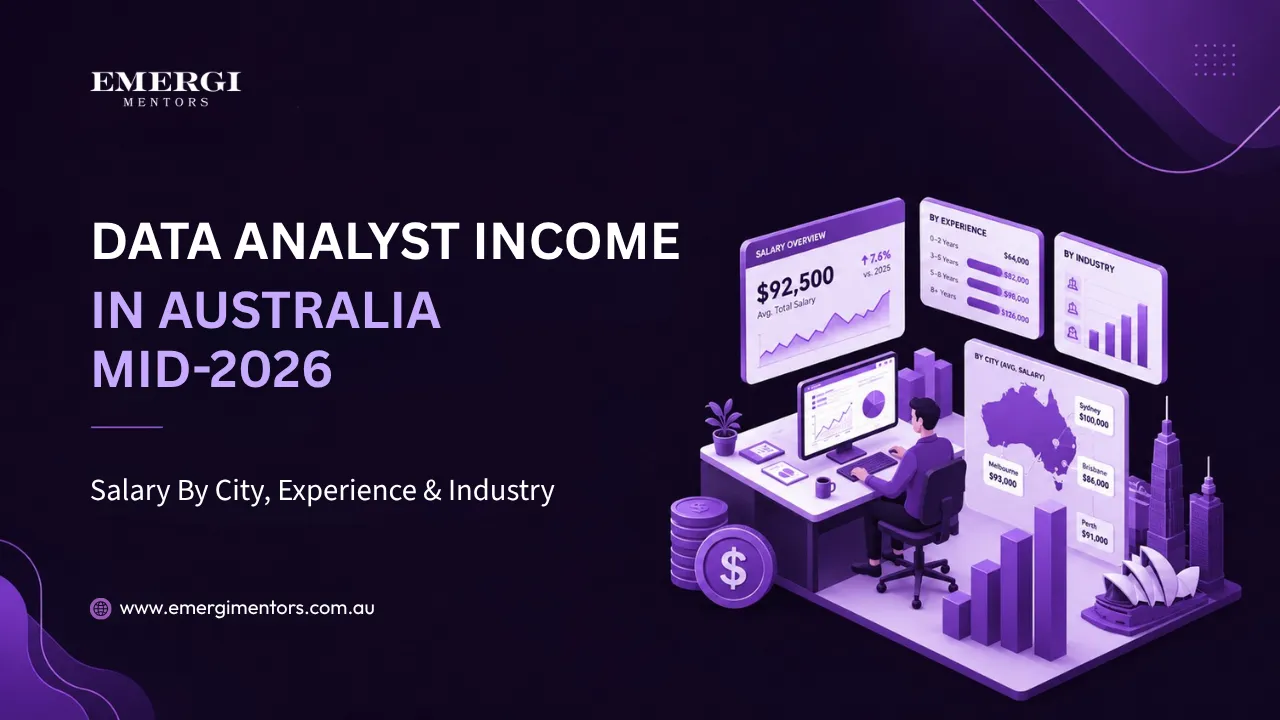
You get different salaries based on your experience level, location, industry, and the specific tools you have. Below we have gathered how the 2026 market looks after combining the data across SEEK, Glassdoor, Indeed, Robert Half, and PayScale.
Salary By Experience Level
Experience Level | Typical Salary Range | Median | Source |
Entry Level (0–2 years) | $65,000 – $90,000 | ~$80,000 | SEEK / Indeed |
Mid-Level (2–5 years) | $90,000 – $115,000 | ~$100,000 | SEEK / Glassdoor 2026 |
Senior (5–10 years) | $110,000 – $145,000 | ~$125,000 | Robert Half |
Lead / Manager (10+) | $140,000 – $180,000+ | ~$160,000 | ERI / Robert Half 2026 |
Data analysts get higher salaries in Sydney due to the concentration of financial services and fintech employers such as Commonwealth Bank, ANZ, Macquarie, and Afterpay. Canberra's also has high average which shows increasing demand from federal government and defence contractors.

Industries That Pay the Most
If salary growth is your primary goal you can prioritise financial services and fintech roles, which are usually among the highest paying, offering salaries from $105K to $160K because companies deal with regulated and high-stakes data. Data analysts in healthcare and biotech sectors get annual pay between $100,000 and $145,000 due to the complexity and importance of healthcare datasets.
Government and Defence roles can pay qualified professionals, with security clearances or experience working within APS salary bands, around $98K to $140K. Analyst’s in the Tech and SaaS sector earn between $95,000 and $145,000 due to demand for product analytics and growth-focused insights.
Retail and FMCG companies may offer slightly lower salaries, around $88K to $118K, mainly because of high-volume operations and tighter profit margins. Meanwhile, Consulting roles usually range from $90K to $130K, with higher pay often linked to client exposure, fast-paced learning, and career growth opportunities.
Data Analytics Real Demand in Australia in 2026?
Data analytics demand is increasing as employment growth rate for its roles is expected about 23% to 27% over the next five years, which is one of the strongest outlooks of any professional occupation in Australia and almost 3000 full-time data analyst positions were advertised on SEEK in early 2026, and more jobs are expected to grow through the year.
Data Engineering is listed as the top tech role along with entire data professionals such as analysts, scientists, and engineers are listed as high-priority hiring on Morgan McKinley's 2026 In-Demand Jobs report. In March 2026, Australia's total employed workforce reached 14.77 million and data roles are exceeding national employment growth.
Why the Demand is Increasing
There are three major factors that are responsible for growing data analytics demand in Australia in 2026 and digital transformation is one of the main factors. Government agencies, banks, and large retailers are mid-way through multi-year transformation projects that are creating permanent analyst staff count not just project roles.
AI tool adoption is creating more analyst work, and AI tools like copilot and automated dashboards are increasing the volume of data outputs that need to be interpreted, quality-checked, and communicated to non-technical stakeholders.
Australia's university system is still producing more generalist IT graduates than specialists in data analytics creating a persistent skill gap. Employers are competing for a smaller talent pool than the demand is, which keeps salaries strong and reduces the time to hire.

What Skills Do Australian Employers Want in 2026?
Technical Skills
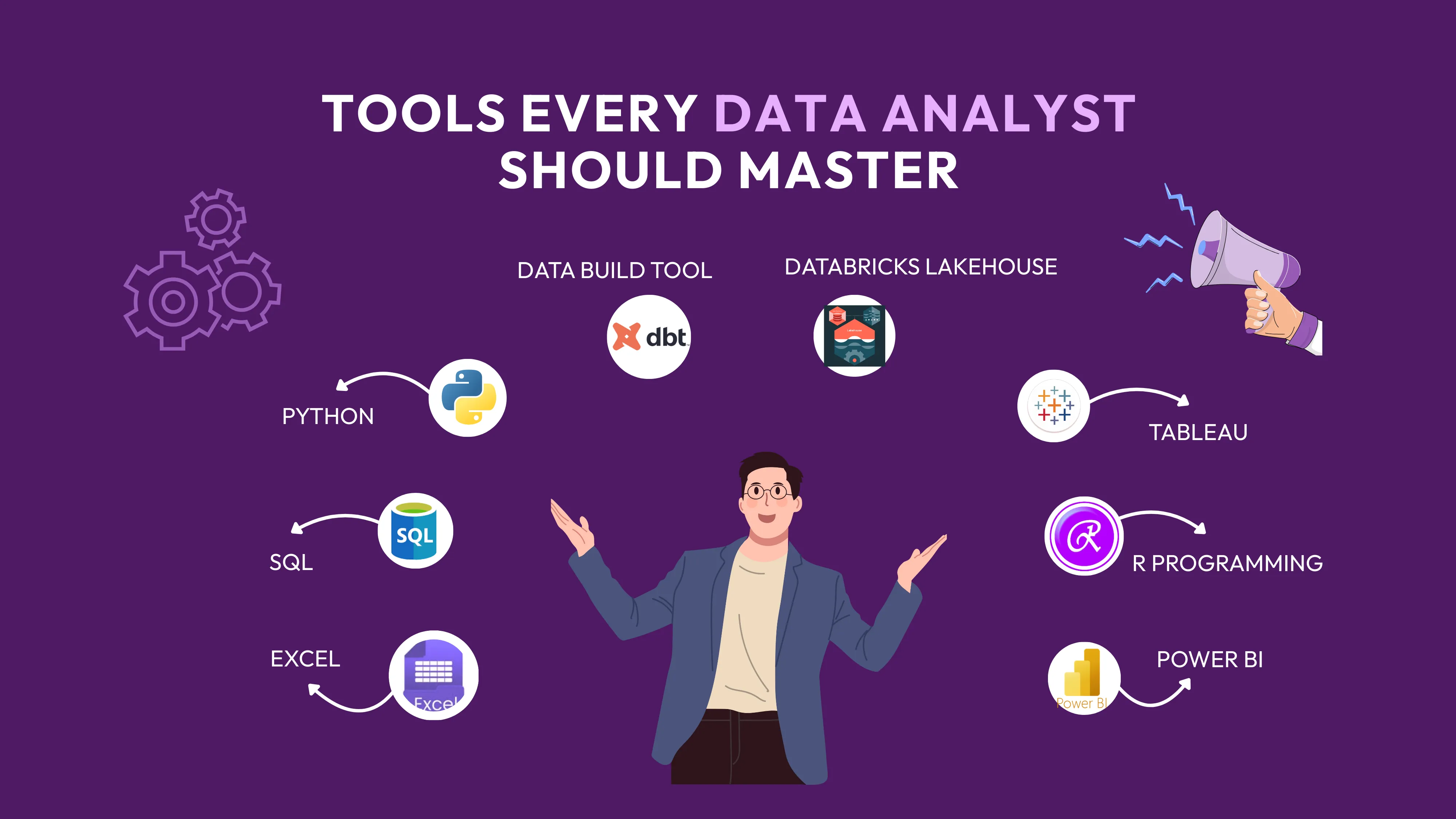
SQL is non-negotiable at every level, and almost every job listing requires it.
Python is now the standard; R is valued in healthcare/research
Power BI or Tableau are also important visualisation tools that are considered core, not optional
Excel / Google Sheets are still widely required, especially in non-tech industries
Cloud platform knowledge, such as AWS, Azure, or GCP, is also desired at the mid-level for data analysts.
Advanced technical skills that differentiate skilled data analysts from common candidates are dbt (data build tool) which are high in demand in data engineering like roles, and Databricks or Snowflake for cloud data warehouse experience. Machine learning basics, Scikit-learn, XGBoost, or basic modelling, Data governance and privacy frameworks (GDPR/Australian Privacy Act awareness) and AI prompt engineering for analyst workflows are crucial.
Soft Skills That Get You Hired
Data storytelling is the skill that is needed for analysts to translate findings into clear business decisions, along with stakeholder management for working with non-technical teams effectively. Analysts who show commercial acumen connecting data insights to revenue or cost outcomes and attention to detail, as small errors in queries lead to flawed decisions, are valued by employers.
Many candidates focus only on technical skills and neglect communication. Australian hiring managers frequently report that the candidates who get through to final rounds are the ones who can explain their findings to a CFO, not just a fellow analyst.
Honest Pros and Considerations before choosing Data Analysis
✅ Pros | ⚠️ Considerations |
Attractive salary from mid-level and onwards from $100K+ by year 3–5 | Entry-level is more competitive in 2026 than 2021–2023 |
High job security as demand for skilled data analysts outgrows supply in most cities | SQL alone is no longer enough, now Python is also expected |
Remote and hybrid work is standard in most data roles | Getting your first job can be hard without a strong portfolio of real projects |
A clear career progression to senior analyst, data scientist, or analytics manager | Career blockage in non-tech industries can be lower than in fintech or SaaS |
Transferable across industries as skills move between finance, health, and tech | It’s difficult to keep up with tooling changes (AI, cloud) requires continuous learning |
Entry is possible without a CS degree, but portfolio and bootcamps count | Some analyst roles are narrowing in scope; 'dashboard monkey' roles are less fulfilling |
AI can be your tool, not your replacement. Data analysts using AI are more productive | Salaries in smaller cities (Adelaide, Hobart) are noticeably lower than Sydney |
Australia's data privacy landscape is creating new specialisations | Without a mentor or network, navigating your first DA role can be isolating |
Data Analyst Career Progression in Australia
If you choose data analytics as your career, you can explore the variety of career paths after building strong core skills. The career journey usually grows over time in many steps from a junior analyst having 0-2 years of experience and basic SQL skills, Excel and reporting to a Data Analyst with 2-5 years of experience and mastering Power BI, Python and communication with stakeholders. Senior data analysts who have 5-8 years of experience can mentor juniors, make strategies, and handle complex projects. They also command higher salaries, around $115K to $145K depending on seniority.
Professionals having 8+ years of experience are usually analytical managers who are team leaders, mentors, and budget makers. They get premium salaries around $140K to $175K. While the head of analytics/CDO are the organisation-wide strategy makers who are among the highest paid tech workers, getting a $175,000 to $250,000 annual salary.
Many experienced analysts transition into data scientists by adding ML and statistical modeling into their skillset, to data engineering by shifting toward pipeline and infrastructure work. By managing BI tools and self-service analytics you can switch into business intelligence lead; product analysts can also get embedded in product teams at tech companies. Some professionals move into consulting for variety and higher earnings and become analytics consultants.

Want to break into data analytics in Australia?
Connect with data analytics professionals who have Australia-specific knowledge and know what employers want in 2026. Book a free 15-minute intro call and get a roadmap built around your background.
Frequently Asked Questions
Is data analyst a good career in Australia in 2026?
Yes, 23-28% employment growth for data analysts over the next five years is predicted; salaries range from $80K to $160K+ depending on experience, and demand is high across industries including finance, healthcare, government, and tech.
What is the average data analyst salary in Australia in 2026?
Entry-level salary typically starts at $65,000–$90,000 and mid-career data analysts (2–5 years) earn $90,000–$115,000 on average and senior analysts earn $115,000–$145,000+
Which city pays data analysts the most in Australia?
Sydney pays the highest average data analyst salaries at approximately $104,500, followed by Canberra at $102,600. Melbourne is at $98,000 on average.
Will AI replace data analysts in Australia?
No, but it is changing the role. AI tools are automating the most repetitive parts of the job like pulling reports, basic visualisations, and data cleaning. Data analysts who can interpret AI outputs, validate models, identify business contexts, and communicate findings to non-technical stakeholders are in demand.