Top 8 Tools Every Data Analyst Should Master (With Expert Tips)

Top 8 Tools Every Data Analyst Should Master in 2025-26 (With Expert Tips)
The data analysis landscape is evolving at rapid speed, with explosive growth in both tool capabilities and employer demand. As we move through 2026, staying competitive means mastering the right mix of established platforms and emerging technologies. We’ve partnered with experienced mentors on Emergi Mentors, who guide professionals through advanced NLP and deep learning projects to identify the most impactful tools that are reshaping the industry.
The Shifting Data Analysis Landscape
Before diving into specific tools, it’s crucial to understand the major shifts happening in the field:
Database technologies moving beyond traditional SQL to handle unstructured and semi-structured data at scale
Low-code/no-code solutions democratizing complex analysis tasks
Cloud-native architectures replacing on-premise solutions
AI-augmented analytics automating repetitive tasks while creating demand for higher-level interpretive skills
According to industry experts, these trends are already transforming hiring requirements at leading tech companies, with candidates now expected to demonstrate familiarity with tools that barely existed two years ago.
Master Database Technologies
1. DuckDB
This in-process analytical database is experiencing explosive adoption for good reason. DuckDB combines the simplicity of SQLite with OLAP performance previously only available in complex distributed systems.
Key Features:
Fast analytical queries on structured data
Supports complex joins and aggregations at unprecedented speeds
Minimal setup with Python, R, Java, and CLI interfaces
Excel-like speed for billion-row datasets
Expert Insight: Many data professionals still approach every problem with Pandas, but organizations are seeing 10-50x performance improvements by transitioning appropriate workflows to DuckDB. It’s becoming the standard recommendation for analytical SQL workloads under ~1TB.
2. Databricks Lakehouse
This unified platform bridges traditional data warehouses with data lakes, supporting structured, semi-structured, and unstructured data processing at scale.
Key Features:
Transaction support combined with performance of warehouses and the flexibility of data lakes
Built-in Delta Lake technology for ACID transactions
Integrated ML frameworks and MLflow for model development
SQL, Python, R, and Scala support
Expert Insight: Databricks Lakehouse skills are increasingly becoming mandatory for senior analyst roles. Professionals who master both the SQL interface and the Python integration tend to accelerate fastest in their job searches.
Analytics & Visualization Tools
3. Observable
This interactive, collaborative notebook environment is rapidly replacing traditional dashboarding tools for data exploration and communication.
Key Features:
JavaScript-based reactive notebooks with built-in visualization libraries
Real-time collaboration similar to Google Docs
Seamless integration of code, visualization, and narrative
Growing community-contributed template library
Expert Insight: Observable is transforming how analysts communicate findings. Those who can create live, interactive analyses rather than static reports consistently receive higher evaluations during project presentations and stakeholder meetings.
4. Power BI with Fabric Integration
Microsoft’s analytics platform has evolved beyond simple visualization into an end-to-end solution with the recent Fabric integration.
Key Features:
New AI-powered insights and natural language interfaces
Direct Query to diverse data sources, including Databricks
Integrated ETL capabilities with dataflows
Seamless enterprise governance
Expert Insight: While Tableau dominated historically, there’s a clear shift to Power BI in enterprise environments. The Fabric integration addresses previous limitations around data transformation and governance that held the platform back.
AI and Machine Learning Platforms
5. Hugging Face Transformers
This open-source platform has become the central hub for implementing and deploying NLP and computer vision models.
Key Features:
Pre-trained models for image, text, and audio processing
Simple APIs for fine-tuning on domain-specific data
Robust deployment options from serverless to edge
Extensive community support and documentation
Expert Insight: The ability to leverage pre-trained models has compressed what was once a month-long training process into days, allowing analysts to focus on application and interpretation rather than model building from scratch.
6. Ludwig by Uber
This code-free deep learning framework is dramatically lowering the barrier to implementing complex models.
Key Features:
Declarative machine learning: create models by specifying inputs and outputs
Automated hyperparameter tuning
Visual model interpretation tools
Integration with popular Python data science stack
Expert Insight: Ludwig is changing who can effectively implement machine learning. Professionals with primarily SQL backgrounds can now successfully build and deploy deep learning models within weeks rather than months.
Data Engineering & Orchestration
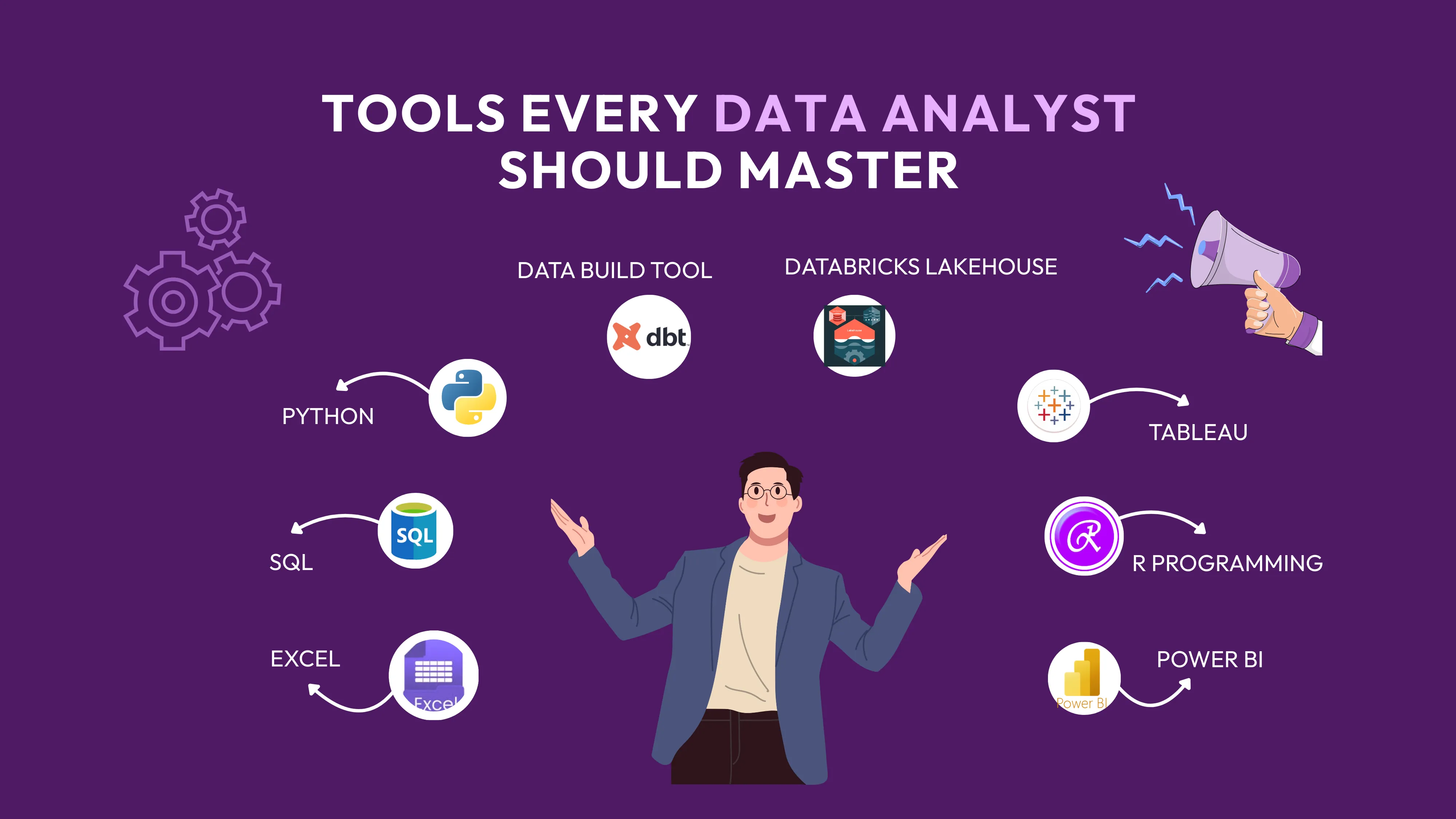
7. dbt (data build tool)
This transformation framework has become the standard for implementing analytics engineering practices.
Key Features:
Version-controlled SQL transformations
Automated testing and documentation
Modular, reusable code patterns
Integration with modern data stack tools
Expert Insight: Analysts who understand dbt can bridge the gap between raw data and decision-ready insights. It’s become a clear differentiator in the job market, particularly for roles that require both analytical thinking and technical implementation.
8. Dagster
This data orchestration platform is rapidly gaining traction for building maintainable data pipelines.
Key Features:
End-to-end visibility of data assets and lineage
Built-in testing and error handling
Resource management and scheduling
UI for monitoring and debugging
Expert Insight: Dagster addresses the ‘now what?’ question that follows basic ETL understanding. Professionals who master orchestration concepts can build truly production-ready systems rather than one-off analyses.
How to Prioritize Your Learning Path
With so many emerging tools, strategic skill development is crucial. Experts recommend this approach:
Start with the tools most adjacent to your current skills
Coming from Python? Begin with DuckDB and Hugging Face
SQL background? Focus on dbt and Databricks
Visualization experience? Explore Observable
Build projects that combine multiple tools in the stack
Example: Extract data with DuckDB, transform with dbt, visualize with Observable
Focus on transferable concepts rather than platform-specific features
Data modeling principles apply across database technologies
Pipeline patterns remain consistent across orchestration tools
Seek mentorship for accelerated learning
Expert guidance helps identify which aspects of each tool are most relevant to your career goals
Mentors provide critical context about how these tools interact in production environments
How Expert Mentorship Can Accelerate Your Mastery
Learning these tools in isolation often leads to theoretical knowledge without practical application skills. Working with a mentor has several advantages when tackling these emerging technologies:
Real-world application guidance for actual business problems
Tailored learning paths personalized for your current skills and career goals
1:1 feedback from industry practitioners who use these tools daily
Portfolio development support focused on demonstrating mastery of high-demand tools
Unlike generic courses, experienced mentors guide you through the challenging integration points between tools. Mentorship is the exact skill that distinguishes exceptional analysts in the job market.
Next Steps? Build Your 2025 Toolkit
The data analysis field rewards early adopters who can take advantage of emerging tools to deliver faster, more sophisticated insights. By mastering even a fraction of these technologies with expert guidance, you’ll position yourself at the forefront of the industry.
Ready to accelerate your learning journey? Book a free consultation with a data analytics mentor on Emergi Mentors to develop a personalized skill development roadmap focused on the tools most relevant to your career goals.