Data Analyst Income in Australia 2026: Real Figures & Context


Data analyst income in Australia right now is genuinely good, but the single number you find on most salary sites does not tell you much. It doesn't tell you about the gap between what a fresh graduate earns in Adelaide and what a senior analyst earns in a Sydney bank; that can be $80,000 or more. So instead of handing you one figure and calling it done, we broke down what Australian data analysts are earning in mid-2026 by experience, city, industry, and contract type, so you can evaluate your own situation with confidence.
How Much Do Data Analysts Get Paid? Mid-2026 Baseline
We gathered updated salaries data from SEEK, Glassdoor, and Indeed from April 2026 which reveals the average data analyst income in Australia between $95,000 and $108,000 per year depending on the source and methodology. SEEK's employer-disclosed range runs $95,000–$115,000. According to Glassdoor, the median salary is $108,000, with the 25th–75th percentile band at $89,000–$120,000. Indeed lists an average salary of $100,548.
None of these figures include superannuation, which adds a further 11.5% on top of base salary. For a mid-level analyst getting $105,000, that is an extra $12,075 per year. It’s a part of your total compensation even if it does not hit your bank account today.
Data Analyst Income by Experience Level Australia 2026
Experience (Years) | Income | Tasks |
Entry-Level (0-2 Years) | $68,000 to $85,000 | Reporting, data cleaning, basic SQL and Excel |
Mid-Level (2-5 Years) | $95,000 to $115,000 | Owning analysis projects, stakeholder presentations |
Senior-Level (5-10 Years) | $120,000 to $145,000 | Strategy-level work, mentoring juniors, advanced tooling |
Lead/Principal Analyst (10+ years) | $145,000 to $165,000+ | Cross-functional leadership, executive reporting |
Average Data Analyst Salary by City
Cities play an important role in deciding which job to take. SEEK's April 2026 salary data shared by employers shows that some traditionally 'lower-tier' markets are competing now. Perth has climbed sharply, due to a resurging resources and mining tech sector. Sydney offers a high salary, averaging $104,500, but also has high living costs. That’s why employers are now offering more remote and hybrid arrangements instead of higher base pay. Sydney is strong in the finance, tech, and consulting industry.
Melbourne offers $104,548 base pay and hiring analysts in the finance, retail analytics, and healthcare sectors. Perth’s resources, mining tech, and engineering has high demand for data analysts and pays premium salary of $115,000 on average.
If you want to work in the logistics, government, and construction sector, then Brisbane offers a base salary of around $107,500. Canberra and Adelaide hire analysts in defence, public, health, and manufacturing sectors.
One notable shift in 2026 is that remote and hybrid work has reduced the importance of geography than it was three years ago. Analysts based in Brisbane or regional NSW who work for Sydney or Melbourne-headquartered firms frequently save the metro pay bracket while enjoying a lower cost of living. This combination has quietly become one of the best financial moves available to data professionals.
Which Industry Are Paying the Most in 2026?
An analyst at a major bank or a fast-scaling fintech will typically make more than someone with the same technical skills working in education or government, sometimes by $30,000–$40,000 at the same career stage.
Finance, Banking & Fintech: Currently top paying, due to Big 4 banks, fintechs, and super funds. You can earn $115,000–$160,000 at mid-senior analysts’ level. ANZ, CBA, Westpac, and Macquarie are active hirers in the industry.
Technology & AI/ML Platforms: It has strong demand for data analysts and offers fast progression with $110,000–$145,000 average pay. AI-augmented analytics roles attract premium pay in 2026.
Management Consulting: industry is variable but lucrative. You can get $110,000–$150,000 at Big 4 and tier-2 firms if you are an analysts with strong client-facing skills.
Mining & Resources (WA/QLD): Resurging in 2026. Data analysts are earning $100,000–$135,000 for operational and predictive maintenance analysts.
Healthcare & Pharma are growing fast while offering $90,000–$120,000 annual pay. Demand accelerated post-pandemic and has not eased.
Retail & eCommerce is competitive in major chains. Base pay is $90,000–$115,000. Large ecommerce platforms like Woolworths, Coles, and other offer solid packages.
Government & Public Sector: Stable at $85,000–$115,000 plus strong super contributions and job security. APS roles often include additional allowances.
If you are not sure about which industry or city suits your background, get real advice about your situation in a 1 on 1 mentorship session with a working Australian data analyst.
Increase Your Salary with These Skills in Mid-2026
What changed from 2025 till now is that AI-augmented analytics is a genuine pay differentiator. Analysts who can work alongside large language models, build prompt-driven reporting pipelines, or validate AI-generated insights are attracting premiums that did not exist at this scale in previous years.
Skills commanding the strongest salary premiums right now:
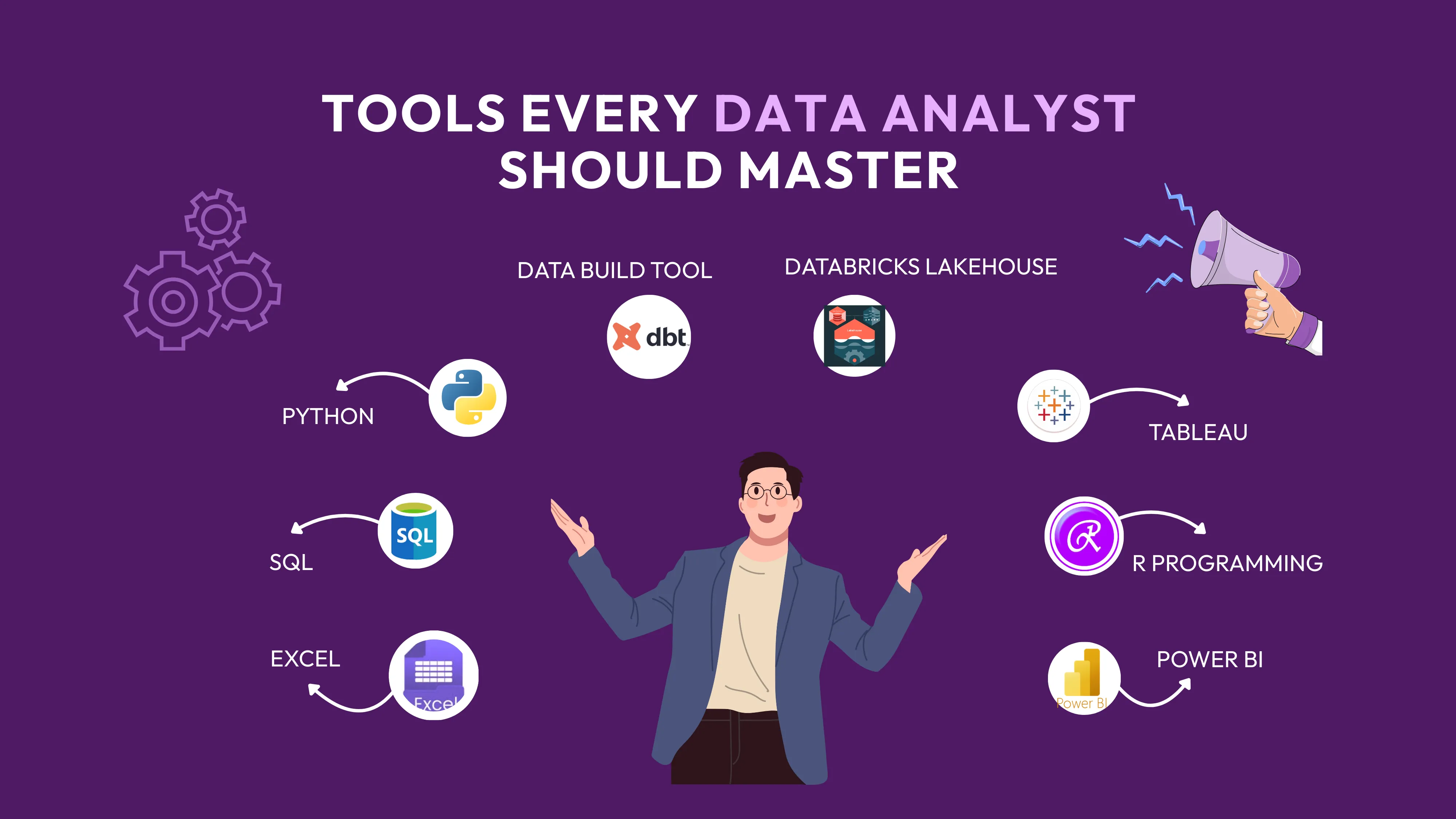
Python (pandas, NumPy, and scikit-learn) is still the most valued technical skill, adding $10,000–$20,000 on average.
SQL at an advanced level, window functions, CTEs, and query optimisation are near-essential to entry-level skills.
Power BI and Tableau are also in high demand in finance and consulting, but Power BI is dominant in enterprise.
AI/LLM integration is a great skill, using tools like Copilot, Claude, or GPT-4 to scale analysis workflows; it's emerging as premium.
Cloud platforms (AWS, Azure, GCP) particularly Databricks and Snowflake in enterprise data stacks, are deemed valuable.
dbt (data build tool) are growing fast, especially valued in mid-to-large data teams
Stakeholder communication and data storytelling are undervalued, but consistently cited by hiring managers as a differentiator at senior levels
Domain expertise in finance, healthcare, retail, and specialist knowledge commands industry-specific premiums of 10–20%.
Australian hiring managers consistently say Certifications from Google, Microsoft, Databricks, or AWS add credibility when they are backed by real project work.
Permanent vs Contract: The Income Trade-Off in 2026
Contract rates for senior data analysts in Australia have increased due to supply and demand. Senior contractor day rates in Sydney and Melbourne currently are $750–$1,050 per day depending on specialisation, with some AI-focused analytics roles exceeding it. Senior data analysts get over 46–48 working weeks a year; that equals a salary of around $155,000 to $220,000 annually, which is much higher than similar full-time permanent salaries.
But the challenges are real too, you get no paid leave, employer super contributions or job security between engagements. For analysts in their first three to five years, permanent roles still tend to offer superior learning structures, mentorship access, and career progression pathways that contracting cannot replicate easily. The calculation changes significantly once you have a strong portfolio, an established professional network, and the finances to manage gaps between contracts.
For many analysts, government contracting remains a reliable pathway in Canberra and the major capitals. APS agencies regularly run 6-12 month data analyst engagements, and security-cleared analysts command particularly strong rates.
Negotiate Your Data Analyst Salary in Australia
In Australia, salary negotiation is one of the highest-return activities to any professional, but most analysts still skip it. Our mentees who negotiate their starting salary earn meaningfully more over the course of their careers, and the snowball effect of a higher base is significant over five to ten years.
Measure your base salary using 2026 data from SEEK Salary Insights, Glassdoor, and LinkedIn Salary, which are all updated regularly and can be cited directly in a salary conversation. Saying 'Based on current market data and my specific experience in X field, I was expecting Y salary' sounds better than any other approach.
Do not anchor first if you can avoid it and if pushed for a number, offer a range grounded in the sources above. Try to negotiate the full package including super rate, WFH days, equipment allowance, annual bonus structure, and professional development budget all have dollar value. Salary reviews in Australia are often passive unless you actively initiate them, so revisit annually and start a prepared, data-backed conversation which is effective.
For independently verified national pay data to use in these conversations, the Australian Bureau of Statistics Earnings and Work Hours survey is the most authoritative public source available and carries weight in a salary conversation with any Australian employer.
Make Your Next Career Move
The analysts who progress fast are often the ones who have invested early in communication skills, stakeholder relationships, and mentorship from people already operating at that level. Connect with experienced Australian data professionals, analysts, managers, and data scientists working across finance, tech, government, and more and save months of trial and error.
The analysts who earn at the top of these ranges in Australia are not always the most technically skilled people in the room. They are the ones who understood the market they were operating in, made deliberate choices about where to work and what to learn, and were not afraid to advocate for their own value. The numbers in this article are a starting point, but what you do with them is where the real work begins.
Frequently Asked Questions
What do entry-level data analysts earn in Australia right now?
Data analyst salaries at entry-level in Australia in 2026 typically range from $68,000 to $85,000. Graduates who have internship experience, a strong portfolio, or skills in Python and SQL tend to land towards a higher end, particularly in Sydney, Melbourne, and Perth.
How much does a senior data analyst earn in Australia?
Senior data analysts in Australia typically earn $120,000–$145,000 base salary in 2026. In high-paying sectors like finance, consulting, or AI-focused tech firms, total compensation includes bonuses and can reach $155,000–$170,000. Contractors at this level can attract day rates of $750–$1,050.
What is the difference between a data analyst and data scientist salary in Australia?
Data scientists currently earn around $134,750 on average in Australia compared to $91,000–$108,000 for data analysts; a gap of roughly 20–30% at comparable experience levels.