Tech Behavioral Interview Questions and How to Answer

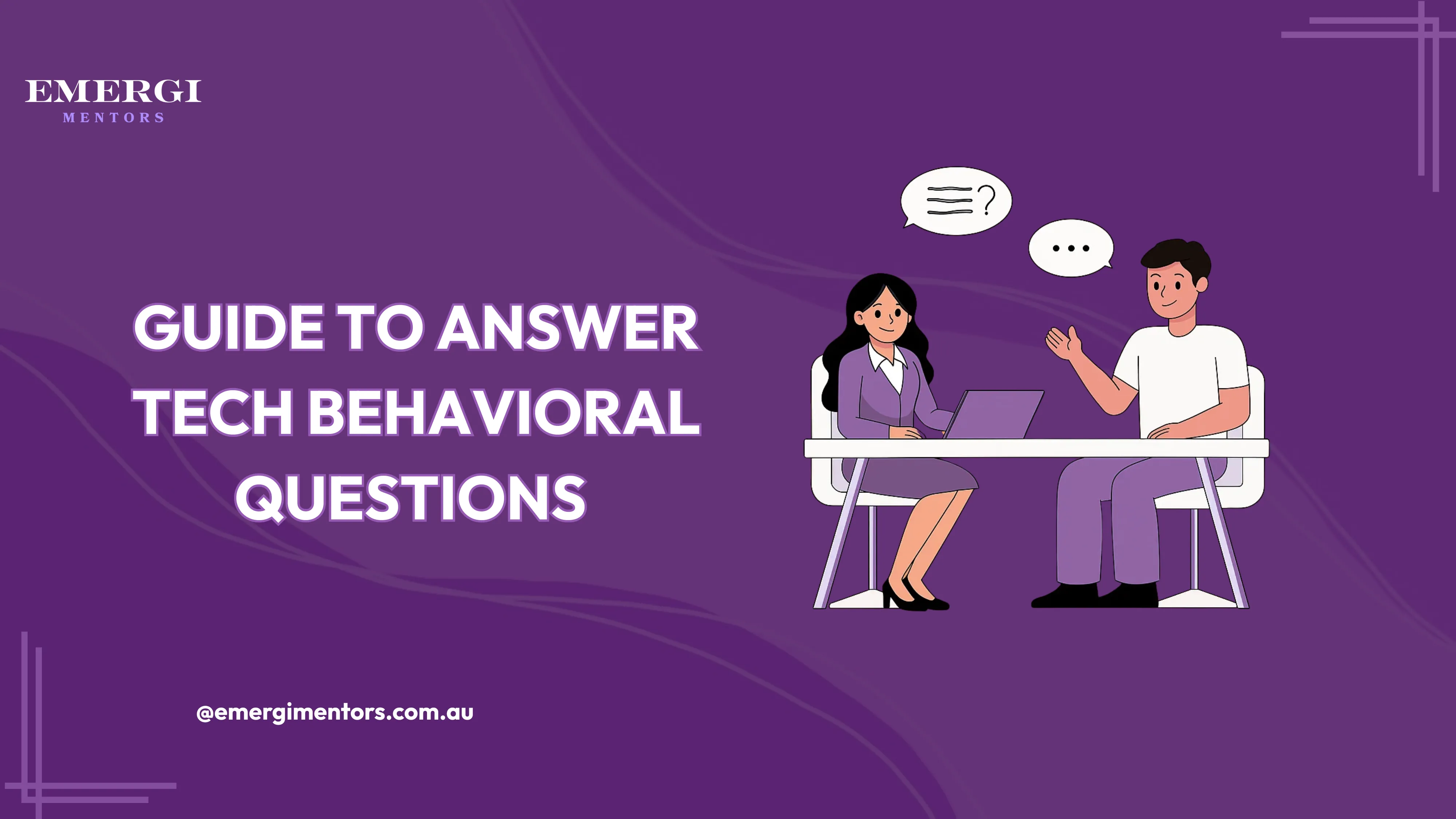
When preparing for a job in the tech industry, most candidates spend their time brushing up on coding, systems design, or technical test questions. But there’s one area many underestimate: tech behavioral interview questions.
In 2025, Australian employers want more than just technical expertise; they want to know how you solve problems, communicate under pressure, and work in teams. Behavioral questions are often the deciding factor between candidates with similar technical skills.
In this guide, we’ll break down:
What tech behavioral interview questions really assess
Common examples you’re likely to face
How to answer them effectively by using the S.T.A.R method
Why mock interview coaching can make a difference
What tech behavioral interview questions really assess
Common examples you’re likely to face
How to answer them effectively by using the S.T.A.R method
Why mock interview coaching can make a difference
What Are Tech Behavioral Interview Questions?
Behavioral questions focus on how you’ve handled situations in the past to predict how you’ll act in the future. In tech roles, these questions often test your problem-solving mindset, communication, and collaboration skills. They assess your adaptability in fast-paced environments. Skills like ownership and accountability and how you respond to failure or feedback are evaluated by these behavioral questions.
Whether you’re applying as a developer, data analyst, engineer, or product manager, these questions are a core part of tech interviews in Australia, especially in companies that follow Agile or cross-functional team models.
Examples of Common Tech Behavioral Interview Questions
Here are a few behavioral questions you’re likely to encounter:
“Speak about a time you had to explain a technical concept to a non-tech stakeholder.”
“Describe a time when you faced a production issue. What did you do?”
“Have you ever disagreed with a teammate? How did you handle it?”
“Tell me about a time when a project/task did not go as planned. What did you learn?”
“Describe a situation where you took initiative apart from your regular responsibilities.”
These aren’t trick questions, but your ability to answer them with clarity and relevance can shape how interviewers view your soft skills.
“Speak about a time you had to explain a technical concept to a non-tech stakeholder.”
“Describe a time when you faced a production issue. What did you do?”
“Have you ever disagreed with a teammate? How did you handle it?”
“Tell me about a time when a project/task did not go as planned. What did you learn?”
“Describe a situation where you took initiative apart from your regular responsibilities.”
How to Answer Tech Behavioral Questions: Use the STAR Method
The STAR framework is a proven technique that helps structure your answers clearly:
S – Situation: Set the scene briefly.
T – Task: Explain the challenge or responsibility.
A – Action: Describe what you did (not the team).
R – Result: Share the outcome, ideally with a metric or lesson.
✅ Example
Question: “Tell me about a time you worked under pressure.”
Answer (STAR):
Situation: At my previous job, a data pipeline broke just before a client deadline.
Task: I had to identify the issue and deliver the cleaned dataset within six hours.
Action: I debugged the code, traced the root cause to a misconfigured API, rewrote the query, and validated the results.
Result: We met the deadline, and the client renewed our contract. My manager praised the fast turnaround.
Practicing this structure ensures your answers are focused, relevant, and confident, not rambling or vague.
S – Situation: Set the scene briefly.
T – Task: Explain the challenge or responsibility.
A – Action: Describe what you did (not the team).
R – Result: Share the outcome, ideally with a metric or lesson.
Answer (STAR):
Situation: At my previous job, a data pipeline broke just before a client deadline.
Task: I had to identify the issue and deliver the cleaned dataset within six hours.
Action: I debugged the code, traced the root cause to a misconfigured API, rewrote the query, and validated the results.
Result: We met the deadline, and the client renewed our contract. My manager praised the fast turnaround.
Why Behavioral Interviews Matter in Australian Tech Roles
Australian tech employers place a strong emphasis on team fit and communication. With remote jobs, cross-functional teams, and client-facing roles becoming the norm, it’s not enough to just know the tools, you need to show how you collaborate, lead, and adapt.
Whether you’re interviewing with a startup in Melbourne, a fintech firm in Sydney, or a consultancy in Brisbane, behavioral questions are often part of final-round or panel interviews, especially when technical skills are assumed to be proven.
How Emergi Mentors Can Help You Prepare
At Emergi Mentors, we’ve seen capable candidates get rejected not because they couldn’t code, but because they didn’t communicate their experience clearly in behavioral interviews.
That’s why we offer mock interview coaching tailored to tech roles in Australia. Our mentors, working professionals in data, software, cloud, and product, can help you:
Practise real behavioral questions from recent interviews
Get feedback on tone, content, and structure
Learn how to frame your experience, even if you’re early in your career
Rehearse STAR responses until they feel natural and authentic
Interview performance isn’t just about what you’ve done; it’s about how well you tell your story. And we help you do that with clarity and confidence.
Practise real behavioral questions from recent interviews
Get feedback on tone, content, and structure
Learn how to frame your experience, even if you’re early in your career
Rehearse STAR responses until they feel natural and authentic
Conclusion: Don’t Let Behavioral Questions Catch You Off Guard
If you’re preparing for a tech interview, remember this: technical skills get you the interview; behavioral answers help you win it.
Know the common questions. Practice your answers with intention. And get support from someone who’s been through the process; consider investing in a mentor.
Book your mock interview session with a tech mentor at Emergi Mentors
Get interview-ready with expert feedback, role-specific guidance, and the confidence to tell your story right.