Java Tech Interview Questions in Australia: What to Expect?

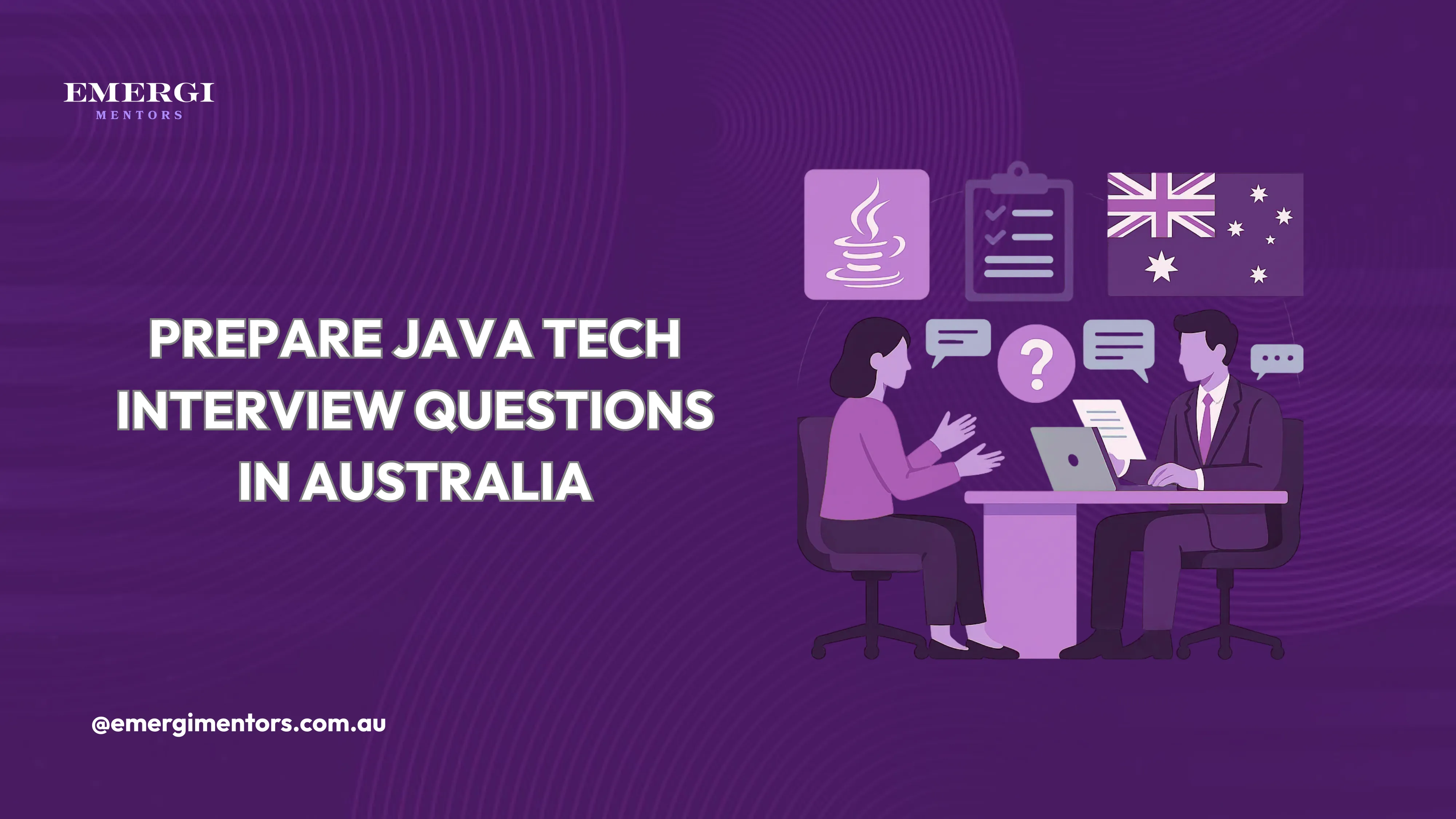
Preparing for Java tech interview questions in Australia? You already know the fundamentals, but walking into a technical interview is a different challenge altogether.
Australian tech companies, from fintech startups to enterprise consultancies, are looking for more than textbook knowledge. They want developers who can write clean, scalable code and communicate effectively with teams. Whether you’re applying for a junior role or a mid-level backend engineer position, understanding the Java tech interview questions you’re likely to face is key to landing the job.
In this guide, we’ll explore what to expect in Java interviews across Australian companies, how to prepare with context, not just code, and where mock interview support can give you an edge.
What Australian Employers Really Test in Java Interviews
Technical interviews in Australia tend to focus on practical application, not just theoretical answers. While core Java knowledge is essential, employers are equally interested in how you solve problems, approach debugging, and explain your logic.
Expect interviewers to cover:
Core Java concepts (OOP, multithreading, collections)
Coding challenges (via HackerRank, Codility, or live screen-sharing)
Systems design questions (especially for mid-level or backend roles)
Unit testing, exception handling, and code quality
Version control and CI/CD familiarity
Some companies also include behavioral and situational questions to assess cultural fit, communication, and your ability to collaborate in Agile environments.
Examples of Java Tech Interview Questions (With Context)
Instead of memorising hundreds of questions, it’s more effective to understand the categories and how you're expected to respond.
You might be asked:
"Can you explain how HashMap works internally?"
This isn’t just about knowing key-value pairs. Employers want you to discuss concepts like hashing, collision resolution, and time complexity."How would you design a thread-safe class in Java?"
This tests both your understanding of concurrency and your approach to solving real-world synchronization issues."Given a list of users, return the top 3 based on login frequency."
This question might require using Java Streams, sorting, or a custom comparator, all while explaining your approach clearly."What’s the difference between an abstract class and an interface, and when would you use each?"
A classic question, but your answer should demonstrate depth, touching on default methods, Java 8 enhancements, and real-world examples.
The goal isn’t just to get the answer right but to think and communicate like a developer who can contribute from day one.
For a broader view of technical interview trends, this guide by GeeksforGeeks offers deeper technical dives into commonly asked Java questions.
Interview Preparation Beyond the Code
A major mistake candidates make is focusing entirely on LeetCode or syntax. While practice problems help, Australian interviews often require structured thinking and strong communication.
Interviewers want to see:
How you approach unfamiliar problems
Your reasoning under pressure
How well you explain technical decisions to teammates or non-developers
That’s why mock interviews, especially with local Australian mentors who understand the hiring culture, can be a turning point.
How Emergi Mentors Helps Java Candidates Succeed
At Emergi Mentors, we connect aspiring developers with experienced Java professionals who have worked at top Australian tech companies. Our mock interview sessions simulate real-world conditions, testing not only your technical ability but also how you frame and justify your decisions.
Whether you're preparing for a graduate program, making a career switch, or trying to break into a mid-level engineering role, a mentor can help you:
Identify blind spots in your technical explanations
Practice Java interview questions in a safe, realistic environment
Learn how to structure answers using proven frameworks (like STAR for behavioural questions)
Build confidence in both live coding and system design conversations
It’s about being more than technically correct; it’s about being interview-ready.
Conclusion: Prepare Like You Mean It
The best way to succeed in a Java tech interview is to treat preparation like a skill, not a cram session. Understand the types of questions asked in Australia. Practice under realistic pressure. And get feedback from people who’ve already been on both sides of the hiring table.
If you're serious about landing a Java developer role in Australia, don’t leave your performance to chance.
Book a 1:1 mock interview session with a Java mentor at Emergi Mentors and prepare with clarity, structure, and local insight.