Data Analyst Salary in Australia (2026): What You Can Expect

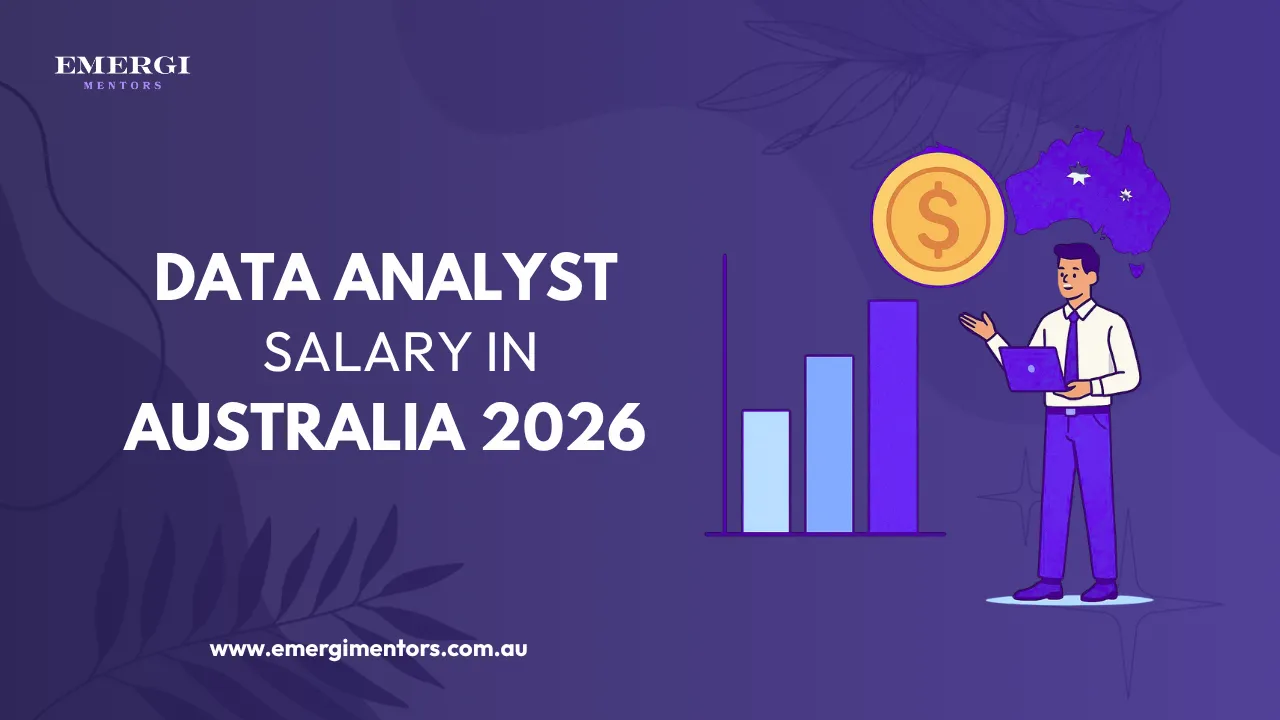
The job boards in Australia often list the national average data analyst salary in Australia between $95,000 and $115,000 per year in 2026. But that number alone does not tell you much. Your actual salary depends on which city you work in, how many years of experience you hold, and which industry employs you.
You need accurate numbers whether you are assessing a job offer, planning a salary negotiation, or deciding whether to enter the field. But you most probably get unclear estimates pulled from outdated sources. We drew publicly available data from Hays, Seek, Glassdoor, PayScale, and Clicks IT to give you a clear picture of data analyst pay across Australia in 2026.
Data Analyst Salary by Experience Level
Having more experience in Australia can significantly improve your salary. The difference between entry-level and senior-level data analyst salaries can reach more than $70,000 per year. The following are the base salaries excluding superannuation, bonuses, and other benefits.
Experience Level | Years | Average Salary (AUD) | Source |
Entry level | (0–2 years) | $90,500 | Indeed |
Mid-level | (2–5 years) | $95,000 – $115,000 | SEEK |
Senior level | (5+ years) | $130,000 | Emergi Mentors |
Lead / Manager | (5-8 years) | $140,000 – $160,000+ | Clicks IT / Glassdoor |
For many analysts, the biggest pay jump happens when they step into mid-level positions. That is when you move from handing tasks to owning an analysis end-to-end. You begin sourcing data, cleaning it, running the numbers, and presenting findings that directly influence a decision. Recruiters value your capability and notice it.
Understanding the data analyst career path can help you know what each career stage actually looks like day-to-day. And if you come in with a portfolio of personal projects, a working knowledge of SQL, and experience with a visualisation tool such as Tableau or Power BI, you are positioned in a stronger negotiating position than most graduates.
Data Analyst Salary by City
You job location affects pay significantly. Sydney often provides a high salary among other cities, but Perth has shown a higher salary average of $115,000 by a clear margin, according to SEEK April 2026 data, whereas Brisbane sits slightly below the national average at $107,500.
If you are willing to relocate, Canberra government roles offer strong compensation with more predictable hours than the private sector. Perth's strong statistics reflect mining sector demand alongside a growing tech industry.

When comparing cities, keep this in mind: Sydney may offer higher salaries, but the higher rent and living costs can reduce what you ultimately save. If you are comparing a Sydney offer against a Melbourne or Canberra role, look for what you can buy, not just the headline number.
Data Analyst Salary Comparison by Industry
Your salary growth often depends on the sector you're working in. Finance and banking consistently offer the highest analyst salaries in Australia around $110,000 to $130,000 while retail and ecommerce are at the lower end giving around $80,000 to $90,000 annual salary. Government roles benefit through job security and structured conditions rather than raw salary. Technology and SaaS companies compete strongly with finance, particularly for analysts with Python and cloud skills.
 Healthcare data roles are growing quickly in Australia as hospitals and health funds invest in electronic health records and outcome data. Salaries in this sector are lower today, but demand is increasing. Data analysts who want meaningful work alongside steady job security choose this sector.
Skills That Increase Your Salary in Australia
Analysts who add Python to their toolkit typically earn $10,000 to $15,000 more than peers who rely only on Excel and SQL. Machine learning and cloud platform skills boost pay even higher, particularly in the technology and finance sectors. AWS certification can increase salary by $5,000 to $10,000, and Tableau proficiency adds around 15% to base pay.
You do not need every skill on this list. Start with SQL, add Python, then choose the next step based on the industry you want to work in. A resume that clearly shows the right skills makes a bigger difference than people expect.
Skill | Estimated Salary Premium | Importance |
Python | +$10,000 – $15,000 | It automates work and enables modelling beyond SQL |
Machine Learning (basic) | +$12,000 – $18,000 | Bridges analyst and data scientist roles |
Cloud Platform (AWS / Azure) | +$8,000 – $12,000 | Companies are shifting infrastructure to cloud, so demand is increasing |
Tableau / Power BI | +$5,000 – $7,000 | Tableau & Power BI are the core dashboarding tools across Australian enterprises |
SQL (advanced) | +$5,000 – $8,000 | advanced query writing sets strong candidates apart |
Data Analyst vs Data Scientist: Salary Gap
Data scientists and data analysts both work with data but have different salaries and responsibilities. Data analysts work on existing data through reports, dashboards, and trend analysis. Data scientists go a step further. They build predictive models, design experiments, and create new analytical capabilities using machine learning and statistical modeling.
Data analysts have a slightly lower salary than data scientists. SQL, Power BI / Tableau, Python (basic) are used by data analysts in daily tasks while data scientists work mainly on Python / R, ML frameworks, and cloud platforms. The boundary between these two roles is narrowing, and many Australian employers now post hybrid positions that pay in the $110,000 to $130,000 range.
If you want to move into a data science career, Python and machine learning are the skills to build. A data analyst mentor who has made that transition can give you a practical roadmap.
Is the Job Market Still Strong in 2026?
Yes, the data analyst job market shows strong growth in 2026 with over 3000 jobs posted on SEEK and Indeed. Sydney and Melbourne are major tech hubs and largest employers of data analysts in Australia.
Professionals now work on improving AI skills and use machine learning models for customer churn prediction. It has increased the need for people who can interpret AI outputs, challenge assumptions, and communicate findings to non-technical stakeholders.
Five Ways to Negotiate a Higher Salary
Well, most aspiring data analysts accept the first offer; I have too, but that is the single most common reason why some people stay behind in their careers. Instead, they should research the market properly and avoid assumptions.
You can cite SEEK, Indeed's, and Glassdoor's latest salary ranges and say, "The current market range for this experience level in Melbourne is $104,000 to $115,000." It's better than saying, "I was hoping for more." Also separate base pay from total compensation. Superannuation, bonuses, professional development budgets, and flexible work arrangements all have real dollar value. Even a role paying $5,000 less can still be the better deal once the full package is counted.
During an interview, let the employer set the numbers. Anchoring comes from them and once a salary figure is set on the table, you can negotiate from that point upward. Always quantify your achievements. E.g., “I reduced weekly reporting time by 40% through a single automated dashboard." Has more value than saying I'm skilled with PowerBI.
Ask when the first performance review happens and what a standard increase looks like. A confirmed six-month path to a raise is still a win.
Not sure how to negotiate your salary or land your first data role? Book a session with one of Emergi Mentors' data analyst mentors; they have done it and can give you a clear and honest plan.
Frequently Asked Questions
What is the average data analyst salary in Australia in 2026
The average data analyst salary ranges from $95,000 to $115,000 annually.
Which city pays data analysts the most in Australia?
Perth leads data at $115,000, then comes Brisbane at $107,500, Sydney at around $106,500, and Canberra at $106,000.
How much does a junior data analyst earn in Australia?
Entry-level analysts with under two years of experience typically earn between $65,000 and $82,000.
Which skills increase a data analyst salary the most?
Python adds the largest individual premium of about $10,000 to $15,000 in data analyst average pay. Machine learning skills also improve your salary but lead you toward data scientist path. Cloud certifications and advanced SQL are also important skills for your data analyst career.