What’s the Easiest Coding Language to Learn in 2026?

When people ask us, “What’s the easiest coding language to learn?” We never give them a one-word answer. Because the honest answer is that it depends on what you’re trying to do. That said, if someone just wants a straight answer, for most beginners in 2026, especially in Australia, that answer is Python. But there are a few situations where Python is actually the wrong choice.
Python reads almost like basic English, and you can build something practical within your first week, and it's directly connected to some of the most in-demand careers in Australia right now. You can choose careers in data analysis, data science, AI automation, and software development. But even if Python is the easiest, it doesn’t fit all jobs. If you want to build websites and see your work come to life in a browser instantly, JavaScript might be the easier path. And if you are new to coding languages, starting with HTML and CSS can make things even simpler.
Why the First Language You Choose Actually Matters
You’ll often hear experienced developers say, "It doesn’t matter which language you start with. You'll eventually learn them all,” and technically, they’re right. You learn multiple languages as you advance into your programming journey. But learning multiple languages can take years, and starting with the wrong language typically means more time before you reach your goal.
The languages that work best for beginners usually have
clean and readable syntax
you can see results quickly
and there's a big community ready to help you when you get stuck
Coding languages help you grow in your programming career
You should understand the importance of coding language in Australia’s tech landscape, where software engineering is expected to grow at 22.6 per cent between 2023 and 2028. Entry-level software engineers can earn from $105,000 to $125,000 and most of the IT roles in Australia pay between AUD $80,000 and $180,000 per year. Technically you can start with a language that’s confusing or not commonly used in the job market; but practically it’s not useful.
Why Python Keeps Working for Beginners
Python doesn’t just teach you code, but it makes you think like a programmer.
Want to print something on the screen? In Python, you write: print(“Hello, world!”). That’s it. No class declarations, no curly braces, no main method. In comparison to Java, where a simple "Hello World" requires class declarations and a main method before it does anything at all.
Python also happens to sit right at the centre of where hiring is happening. Software frameworks such as TensorFlow, PyTorch, and OpenAI's APIs all function on Python. AI, data science, backend development, or automation; Python appears in almost every job listing across these fields.
Other languages gaining popularity in Australia are
Java
React
C#
Angular
Node.js and
Swift or Kotlin
If you’re applying to Atlassian, Commonwealth Bank’s tech grad program, or any startup working in the AI space, you’re going to encounter Python at some point of the hiring process.
It has been the most popular language taught at universities globally for many years and has endless learning resources. You can find free tutorials, YouTube channels, courses, and communities focusing entirely on helping beginners.
So, is Python the easiest programming language? For most people starting from zero, yes. It removes most hurdles from building something useful.
When Python Isn’t Actually the Right Answer
Is Python the best first coding language? Not definitely.
Getting started with Python is not the right choice if your goal is web development, building websites, landing pages, and interactive apps. The web pages run on JavaScript. Every browser on every device understands JavaScript by default. When you write a few lines, save the file, and refresh the browser to see it work; that feedback loop is genuinely exciting.
You can ask any developer which language they started with, and most of them will say JavaScript. Nearly 66% of people included in Stack Overflow’s 2025 Developers Survey said that they used JavaScript within the last year, making it the most popular programming language in 2025 and 2026. Beginners can get many job opportunities and free tutorials. Using JavaScript feels easy at first, but it becomes tricky quickly.
JavaScript gets complicated fast. Honestly, we used to think JavaScript was easier until we watched a student spend four hours debugging an async function on day two. Job listings for front-end and full-stack roles will almost always list JavaScript as a requirement, often alongside frameworks like React.
If someone has never written a single line of code in their life, HTML and CSS are great options for them. Starting them is even simpler than Python or JavaScript. They aren't technically "programming languages", but every website on the internet is built with them. You type a heading tag, open the file in a browser, and see it. You change a colour in CSS and watch it update. The feedback is immediate and visual, and it builds confidence before you have to think about logic.
The path to JavaScript is relatively easy from HTML and CSS. Starting with HTML and CSS gives you a foundation for web development without needing to understand programming logic yet. It builds confidence in the beginner stage.
For beginners interested in mobile apps, Swift or Kotlin may be more relevant, though they can feel slightly more structured and technical at the start.
A Practical Comparison of Coding Languages by Goals
Each programming language is used for a different purpose and helps you achieve different goals.
Language | When It’s Best | When It’s Easiest |
Python | Data science, backend development, AI, automation, and general coding. | If you want to work with data, build scripts, or advance into tech with lots of options. |
JavaScript | Web development, full-stack engineering, and visual things in browsers. Full-stack and front-end roles | It's easiest if you're inspired by seeing results on screen immediately |
HTML + CSS | Building and styling web pages. Used for creating the structure and content of webpage | Not a coding language, but a suitable option for beginners |
SQL | data, analytics, or business intelligence | Its commands are simple, like English, and used in every tech role. It's also a practical starting point |
Ruby | Best for graduates who want to work in startups and build elegant and readable code | Ruby has smaller community than Python or JavaScript but still a good choice for beginners |
What’s Different About Learning to Code in 2026
A few years ago, learning code meant struggling through tutorials, copying examples, and spending days debugging a single error. The experience hasn't disappeared, but it changed in a meaningful way
People now learn programming with AI coding assistants. These tools can explain:
what your error means
suggest corrections
guide you through concepts
make learning easier
You can become job-ready faster with these tools, but basic concepts remain important.
A student who understands why their code works will always outperform one who just copies what an AI suggests without understanding it.
Here’s some good news for people working in the Australian tech force, Australia is currently facing a skill shortage in software engineering, cybersecurity, and AI-related roles, and employers across Sydney, Melbourne, Brisbane, and other cities are frequently hiring developers who have practical and project-based skills.
How to Avoid the Mistake Most Beginners Make
The most common way people fail to learn coding is that they spend months watching tutorials without building anything.
Tutorials feel productive because you're always learning something new. But if you can't build something without a step-by-step guide, you haven't learned it yet. Real learning happens when your code breaks, and you must work out why.
Pick a goal early and work towards it. Start with a simple portfolio website, a script that automates a boring task, basic data analysis, and work towards it. Let your mistakes teach you.
The other thing that makes a measurable difference is having someone to ask when you get stuck. Not just a forum thread from five years ago, but a real person or community that can look at your specific situation and say, "Here's what's going wrong, and here's how to think about it." You get the motivation to keep going in thirty seconds with someone experienced, which you don’t get in three hours alone with your bug.
We connect aspiring coders and career changers with experienced tech professionals who've been exactly where you are. If you're figuring out which language to start with, trying to land your first junior role in Sydney or Melbourne, or just need someone to keep you accountable, our mentors are here to listen. You are one step away from the right guidance.
Which Easiest Coding Language Should You Start With?
Stop asking what’s trending and ask yourself what you want to build. What kind of work do you actually want to do? How much time can you realistically put in each week? Are you making a career change or adding a skill to what you already do?
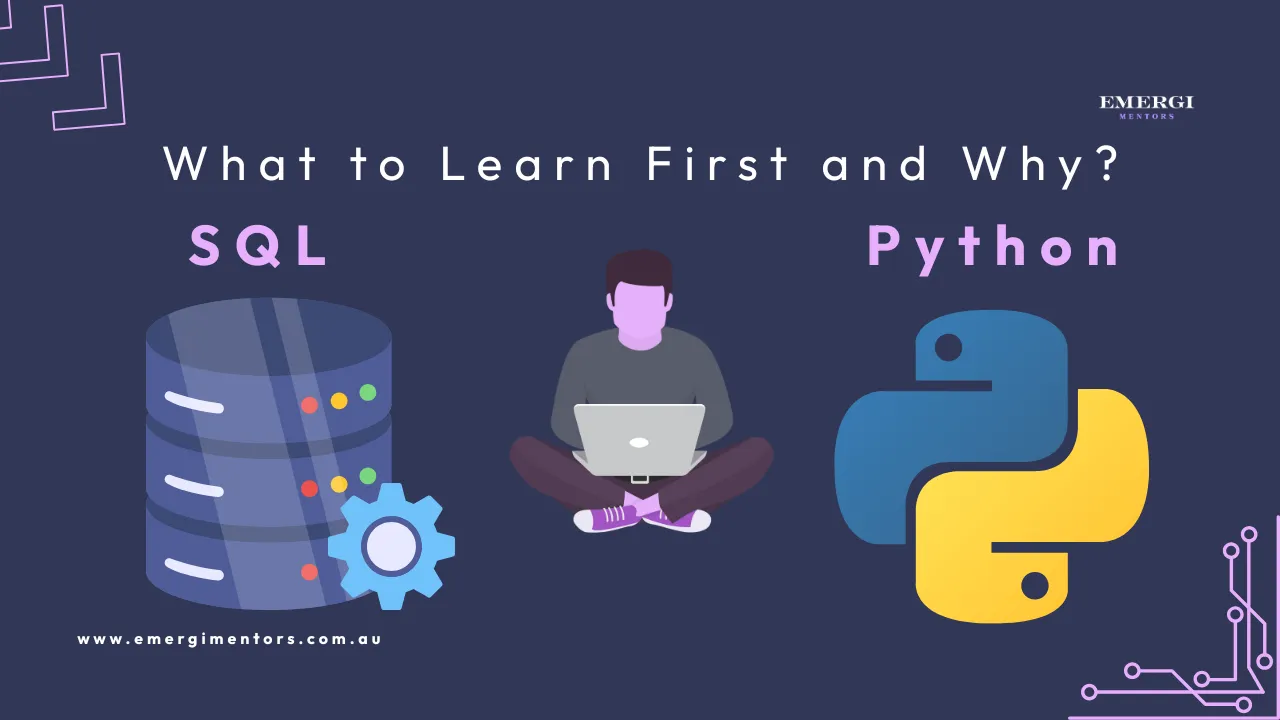
If you want to work with data, build AI tools, or automate things, start with Python.
If websites and apps are your goal, JavaScript (or HTML and CSS first) is the clearer path.
If you work in marketing, finance, or operations and want coding to be a practical add-on, Python automation or SQL might be the most immediately useful skill you can pick up.
Python basics can be learnt in a few weeks of regular practice. Getting job-ready typically takes six to twelve months. And the timeline shortens when you have the right support by your side.
Choose easiest coding language wisely
"Easiest" is more personal than any article that can fully explain. If visual results motivate you, JavaScript might work faster for you. If you've never written a line of code, HTML and CSS remove every challenge and give you a win on day one. And if you're working in marketing, finance, or operations and want to add coding to your existing role, SQL or Python automation might be the most practical skill to start with.
But if you’re asking us what gives most beginners the best chance of truly getting somewhere, Python is still the answer.
Frequently Asked Questions
What is the easiest coding language to learn for a complete beginner?
Python is the most commonly recommended starting language for complete beginners. Its syntax is clean and close to plain English, there are numerous learning resources available, and it leads instantly to in-demand career paths in AI, data science, and software development.
Is Python the easiest programming language?
For most beginners, yes. For Python you don't need a complex setup; the code reads naturally, and you can start building useful things quickly. But if your goal is specifically web development, JavaScript may feel easier because of its instant visual feedback in the browser.
What is the easiest programming language for beginners who want a job?
Python and JavaScript are the two best choices for job-readiness. Both are highly employable skills.
How long does it take to learn a beginner coding language?
Basic learning takes six to eight months of consistent practice. Reaching a job-ready level takes up to one to two years. The learning time also depends on whether you have guidance or are learning by yourself.