
If you're picking a data engineering course and are confused about choosing the right one. Want to make a decision about a paid or free program here's what we suggest our mentees: Go for one that makes you write SQL, Python every week, helps you start working on a real cloud platform, and ends with a pipeline you can show a hiring manager. Free courses and vendor certificates are fine for learning the tools. But if you're just starting and want a job, a program with live teaching, projects and job support is the safer option.
When you Search "data engineering courses" on google, you get universities, bootcamps, vendor pages, Reddit queries and a pile of YouTube playlists. They all look reasonable. None of them tell you which one suits you.
So that's what we'll explore here for you. We'll tell you what the data engineering job really involves, what Australian employers ask for, the kinds of course on offer, and how to choose without burning six months on the wrong one.
What Does a Data Engineer Do?
A Data Engineer is responsible for building and maintaining the systems that allow businesses to collect, process, store, and access data efficiently. They work behind the scenes to make sure information from different sources is organised, reliable, and ready for use.
Businesses generate data through customer transactions, websites, mobile applications, internal systems, marketing campaigns, and many other activities. However, raw data is not always easy to work with. It may contain missing values, inconsistent formats, duplicate records, or information scattered across multiple platforms. Data Engineers solve these problems by designing automated processes that turn raw information into structured, usable datasets.
Their work helps Data Analysts create accurate reports, Data Scientists develop predictive models, and business teams make decisions based on reliable information rather than incomplete or outdated records.
Key Responsibilities of a Data Engineer
The day-to-day work of a Data Engineer can vary depending on the company, its technology stack, and the amount of data it handles. Some of their most common responsibilities include:
Building data pipelines: Creating automated workflows that transfer data from different sources to databases, cloud platforms, or data warehouses.
Preparing and transforming data: Converting raw information into consistent formats, combining datasets, and resolving data quality issues.
Managing data storage: Designing and maintaining databases, data warehouses, and other storage systems that can handle business requirements.
Automating data processes: Scheduling recurring tasks so that data is collected, processed, and updated without manual intervention.
Maintaining data quality: Checking that information is accurate, complete, consistent, and available when needed.
Improving system performance: Making data workflows faster, more efficient, and capable of handling growing volumes of information.
Working with other teams: Collaborating with analysts, software developers, data scientists, and business stakeholders to understand what data is needed and how it should be delivered.
How Does Data Engineering Work in a Real Business?
Consider an online retail company that sells clothing and accessories. Every day, it receives information about customer orders, payments, product views, returns, stock levels, and delivery updates. This information comes from different systems and cannot always be analysed in its original form.
A Data Engineer creates a process to bring this information together. Data from the website, payment platform, inventory database, and delivery system can be collected through automated pipelines. The engineer then applies the necessary transformations, removes inconsistencies, and organises the information before loading it into a central data warehouse.
Once the data is prepared, the company's analytics team can use it to investigate sales performance, identify popular products, understand customer behaviour, track returns, and monitor inventory. Instead of manually collecting information from several systems every time a report is needed, teams can work with data that has already been processed and organised.
This is one of the main reasons Data Engineering is important. It reduces manual work, improves the reliability of business reporting, and creates a foundation for more advanced analytics and data-driven decisions.
Tools and Technologies Used by Data Engineers
Data Engineers use a combination of programming languages, database technologies, cloud platforms, and workflow tools. The exact tools depend on the organisation, but the following are commonly associated with data engineering work:
SQL: Used to retrieve, manipulate, join, and organise data stored in relational databases.
Python: Helps with automation, data processing, API integrations, and building data workflows.
Apache Spark: Used to process large datasets across distributed computing environments.
Cloud platforms: AWS, Microsoft Azure, and Google Cloud provide infrastructure and services for storing and processing data.
Data warehouses: Platforms such as Snowflake, BigQuery, and Redshift help businesses store and query data for analytics.
Apache Airflow: Used to schedule, coordinate, and monitor data workflows.
Git and Docker: Support version control, collaboration, and consistent development environments.
Learning these tools is not about collecting as many technology names as possible. It is more important to understand how data moves through a system, how different components connect, and how to build processes that are reliable and easy to maintain.
What Skills Do You Need to Become a Data Engineer?
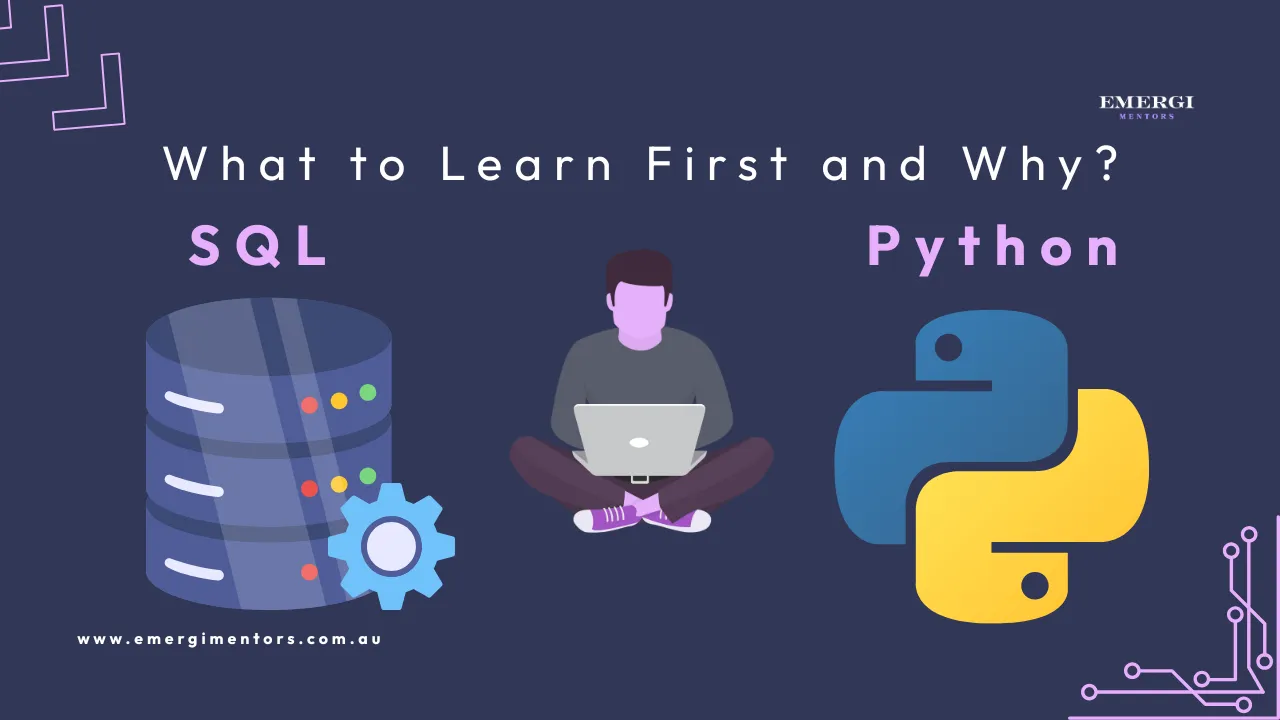
Data Engineering requires a combination of programming knowledge, database skills, problem-solving ability, and an understanding of how modern data systems work. SQL and Python are good starting points, particularly for beginners who want to develop a practical foundation.
As you progress, you can explore data modelling, ETL and ELT processes, cloud computing, data warehousing, workflow automation, and distributed data processing. Understanding concepts such as data quality, pipeline failures, scalability, and system performance is also important.
Hands-on practice makes these skills easier to understand. For example, building a project that collects data from an API, transforms it using Python, stores it in a database, and runs scheduled updates can give you a clearer picture of what Data Engineers actually do in a professional environment.
Ultimately, Data Engineering is about making data dependable and accessible. The systems they build allow organisations to move beyond scattered information and use their data more effectively across reporting, analytics, operations, and AI.
Imagine a company that sells things online. Orders land in one database, website clicks in another, ad spend in a third tool. Somebody has to pull all of that together, tidy it up and put it where the analysts can use it. That somebody is a data engineer.
Honestly, it's plumbing. Not glamorous, but when the pipes leak every dashboard downstream is wrong and nobody trusts the numbers.
Not sure whether you'd rather build the pipes or read the numbers? Our guide to data analyst vs data engineer lays out pay, daily tasks and who each role suits.
What should a data engineering course teach?
Skip the sales page and read the syllabus. You want to see SQL near the top, because you'll use it nearly every working day. Python comes next, mostly for cleaning data and automating jobs. After that, look for data modelling and warehouses such as Snowflake, BigQuery or Redshift, then the pipeline side, which in practice means dbt and Apache Airflow. You'll also need real time on a cloud, and the job ads you're targeting will tell you which one. Spark and Databricks matter more at bigger companies, and you'll pick up Git as you go.
If the outline has no SQL, no cloud and no project you build yourself, move on. A course made of slides alone won't get you through a technical interview.
What types of data engineering courses are there?
There are five common routes, and they differ a lot in cost, speed and how much help you get along the way.
Course type | Best for | What it does well | Where it falls short |
University degree or diploma | People who want a formal qualification | A recognised credential and solid theory | Slow and pricey, and often behind on current tools |
Online platforms (for example Coursera) | Self-starters testing the field | Cheap and flexible | Nobody checks your work, so it's easy to drift away |
Vendor training (Databricks, Microsoft, Google Cloud) | People who know the basics already | Official tool knowledge and certificates | Covers one ecosystem, not the whole job |
Bootcamps | Career switchers in a hurry | Intense and project-heavy | Fast pace, and quality varies a lot |
Mentor-led programs | Beginners who want guidance and a route to work | Live sessions, feedback, job support | Fixed intake dates |
If you already have the basics, the Databricks training catalogue, the Microsoft Learn data engineer path and the Google Cloud data engineer path are all worth a look. Coursera is a low-risk way to test the water first.
Which data engineering course is best for beginners?
The best course for you as a beginner is the one that teaches you the right skills in the right order, rather than focusing only on the certificate you receive at the end.
Select a course that includes hands-on projects, practical exercises, and opportunities to apply what you're learning instead of just watching videos or memorising concepts. That'll helps you build confidence, understand how things work, and develop skills you can use when applying for jobs.
The goal is to finish a course with more than just a certificate. You should have a clear understanding of your skills, some practical work to showcase, and a better idea of how to take your next step into the industry.
We have seen this sequence work for most of our mentees:
Start with SQL. Give it two to four weeks, because everything else leans on it.
Add Python, but only the useful bits: reading files, cleaning data, calling APIs.
Pick one cloud platform, ideally the one named most in the job ads you want.
Build a pipeline. Pull data from an API, reshape it, load it into a warehouse, and put the code on GitHub.
Only then bring in Airflow and Spark. They make much more sense once the basics are solid.
Step four is where most people get stuck. Watching videos feels like progress, but a finished project is the thing a hiring manager can actually judge. That's the main reason guided programs with feedback tend to work better than going it alone.
As a data mentor, I often see students or beginners get stuck when learning how different tools connect and work together in a data pipeline. Many can write basic SQL or Python but struggle to understand data extraction, transformation, storing data and how the whole process works in a real project.
How much do data engineers earn in Australia?
We all have been at a stage in our career when salary was a big reason, we started looking at courses. Employment Hero puts the median base salary for a data engineer in Australia at about $137,000, with entry-level roles starting near $88,000. Indeed reports an average base closer to $130,000. The numbers differ by source, city and seniority, and most leave out super, so treat them as a rough estimate.
What matters more is the rise from that $88,000 starting point. Cloud and pipeline skills are what move people up the range, which is exactly why the tools your course teaches deserve a close look. For demand and outlook, Jobs and Skills Australia tracks employment trends for ICT occupations.
How long does it take to learn data engineering?
It could take roughly six months to a year if you study steadily. Someone who already writes SQL as a data analyst can often get there faster, and someone juggling a full-time job and family will take longer. That's normal given your certain situation.
We explained this further in our post on how long it takes to become a data engineer. And if you'd like a clear order of topics, the free Data Engineer roadmap on the Emergi Mentors career hub shows what to learn and when.
How do you choose between data engineering courses?
Before you select a course and pay anyone, ask these five important questions.
Will you build real projects, or just collect certificates?
Will an actual person look at your work and tell you what's wrong with it?
Does the course cover SQL, Python, cloud and orchestration, or is one of them missing?
When was it last updated, given how fast the tools change?
And lastly, does anyone help with the job hunt afterwards, with resumes, interview practice, introductions?
If the course was built around Australian job ads and Australian salaries, even better. Local context makes the advice a lot more useful. A course that only sells a certificate won't do much for you in the long run. Even after the course is finished you may struggle to land a job without expert guidance and roadmap.
Where does the Emergi Mentors program fit?
Our expert data mentors carefully built our data analytics and data engineering program for people who want more than videos. It combines live training, a guaranteed internship, and job placement support, so you learn the skills and also get a route to real experience and interviews.
It suits career switchers, recent graduates, and people coming back to work who want structure and feedback. It's not for anyone after a quick certificate with no effort involved.
See how the program works: Explore the Emergi Mentors data analytics and data engineering program.
Not sure which route is right for you?
Choosing is easier when someone experienced looks at your background first. On our free strategy call, a mentor goes through your experience and goals, then tells you honestly which path fits. Sometimes that's a free course. It's recommended to book your free strategy call and get a clear roadmap.
Frequently asked questions
Are data engineering courses worth it?
Yes, if the course has real projects and teaches what employers list in job ads: SQL, Python, a cloud platform and pipeline tools. A certificate on its own rarely lands interviews. A portfolio does.
Can I learn data engineering for free?
Yes. Databricks, Microsoft Learn and Google Cloud all publish solid free material. The harder part is staying consistent, getting feedback and turning what you learn into a job, and that's where structured programs earn their fee.
Do I need a degree to become a data engineer?
No. Plenty of data engineers come from analytics, IT or self-taught backgrounds. A degree helps with some employers, but a strong portfolio and practical skills carry real weight.
Is data engineering harder than data analytics?
It's more technical. You'll write more code and deal with cloud infrastructure and system design, while analytics leans toward querying, reporting and explaining results. Many people start in analytics and move across.
What is the best certification for data engineers?
There's no single winner. Pick the one that matches the cloud platform your target employers use, such as the Microsoft Azure data engineer certificate, the Google Cloud professional data engineer certificate or a Databricks certification.
Do I need to know coding before I start?
No, but you'll learn it. Good beginner courses teach SQL and Python from scratch. Expect to practise a little every week.
Can I get a data engineering job with no experience?
It's possible, though harder than in analytics. Projects, an internship or a placement make a big difference because they show employers you've worked with real data.