Resume Format for Information Technology Roles in Australia

The ideal resume format for information technology roles in Australia is a single-column, reverse-chronological document, one to two pages long for most people, with a grouped skills block near the top and measurable results under each role. That layout is quick for a recruiter to scan and easy for the software behind SEEK, PageUp and Workday to scan.
It matters more this year than it did two years ago. SEEK's July 2026 Employment Report shows job ads down 6.0% year on year, while applications per ad are at their highest level on record. When one role draws that many applicants, a resume that is hard to scan gets skipped, even if the experience behind it is stronger.
We’ll covers below the layout, section order, length and ATS behaviour that apply to an information technology resume in Australia, and how to adjust it for different roles. It was updated in September 2026 and sits alongside our wider guide to writing an information technology resume.
What is the best resume format for information technology jobs in Australia?
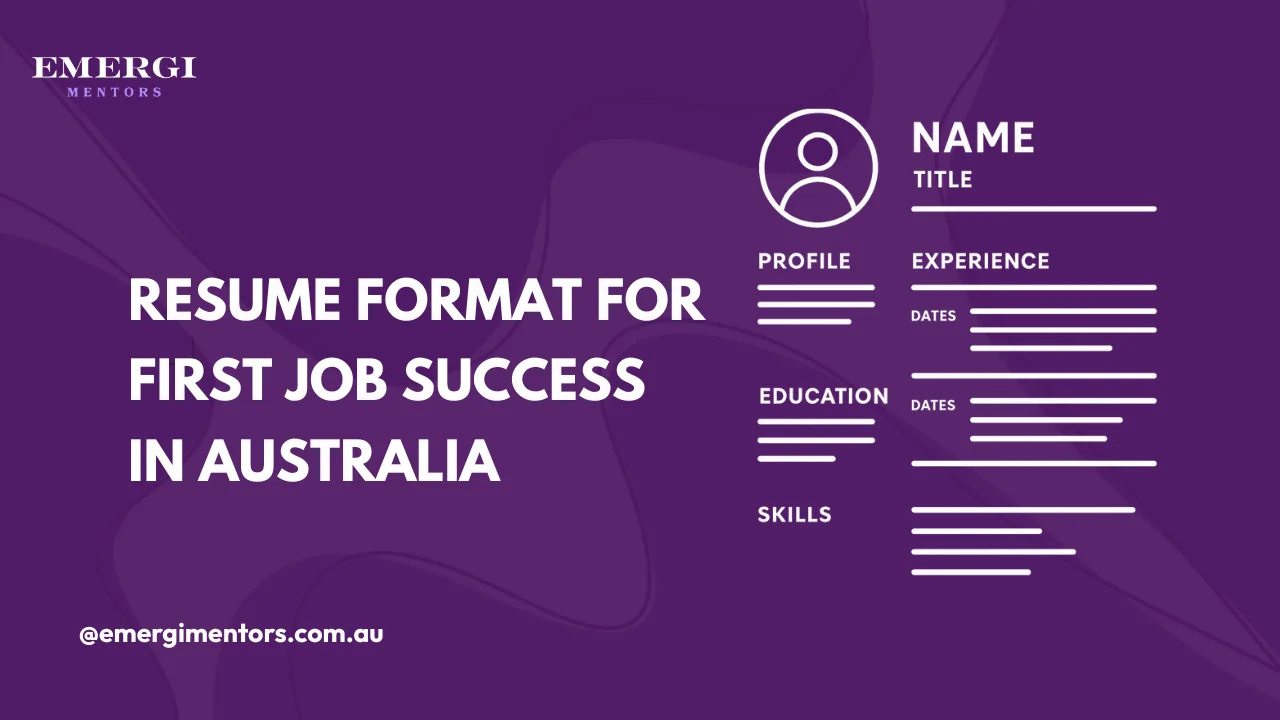
Use reverse-chronological order, with your most recent role first. Keep a single column, standard headings, and plain font. Place a short summary and a grouped technical skills section above your experience, then add education, certifications and projects. Employers hiring IT candidates want to see current tools and recent responsibilities first, and ATS checking software expects this order.
Element | What to do | Why it works |
Layout | Single column. No tables or text boxes. | Softwares read from top to bottom. Columns can scramble the order. |
Length | One page for graduates, two for most people, three for senior specialists. | Matches SEEK and Indeed Australia guidance. |
Section order | Contact and work rights, summary, technical skills, experience, education and certifications, projects, referees. | Puts what recruiters scan first near the top. |
Font | Calibri, Arial or Helvetica at 10 to 11 pt. | Readable on screen and on paper. |
File type | DOCX or text-based PDF, whichever the job ad asks for. | The application portal's instructions come first. |
Why does resume formatting matter more in the 2026 Australian tech market?
Four current facts explain the pressure.
More people are chasing fewer ads. Beyond the SEEK figures above, the ABS reports that job vacancies in the three months to May 2026 sat 30.3% below their May 2022 peak.
The tech workforce is changing shape. ACS Australia's Digital Pulse 2026 found that the tech workforce shrank for the first time, down 0.3% to about 967,000 workers in 2025. ACS also expects Australia to need 259,000 more technology professionals by 2035. The jobs exist, but employers are hiring specific technical depth.
Skills lists date quickly. SEEK's June 2026 report has AI skills mentioned in job ads up 64.1% on a year earlier, and agentic AI up 174.4%. A skills section that reads like 2019 will look dated next to those ads.
The first read is short. The Ladders eye-tracking study, the source of the well-known "six seconds" figure, was updated in 2018 to 7.4 seconds for the initial screen. It was a US study, so treat the number as a guide, not an Australian benchmark. What holds up is the pattern: simple layouts with clear headings held recruiters' attention, while multiple columns and cluttered pages did not.
How does an ATS read your resume?
An applicant tracking system (ATS) is mostly a database with a workflow attached. It stores applications, runs your file through a tool that pulls out job titles, dates and skills, and lets recruiters search and sort. PageUp, JobAdder and Workday are common with Australian employers, including in the public sector.
The popular fear is that an ATS automatically rejects resumes that score low on keywords. Huntr's 2026 analysis finds that no major ATS rejects a resume on its content alone without a human involved. What does filter automatically is the knockout question in the application form, such as whether you have full work rights in Australia or hold a required certification.
Formatting still matters, because the ATS checker is where a good resume can go wrong. Tables, columns and text boxes can scramble your content, and Huntr notes that Workday's parser ignores contact details placed in headers and footers.
Run this copy-paste test before you submit:
Open your resume and select all the text.
Paste it into a plain-text editor such as Notepad.
Check that your name, contact details, job titles, and dates appear in a sensible order. If sections are jumbled or missing, remove columns, text boxes, and icons, then test again.

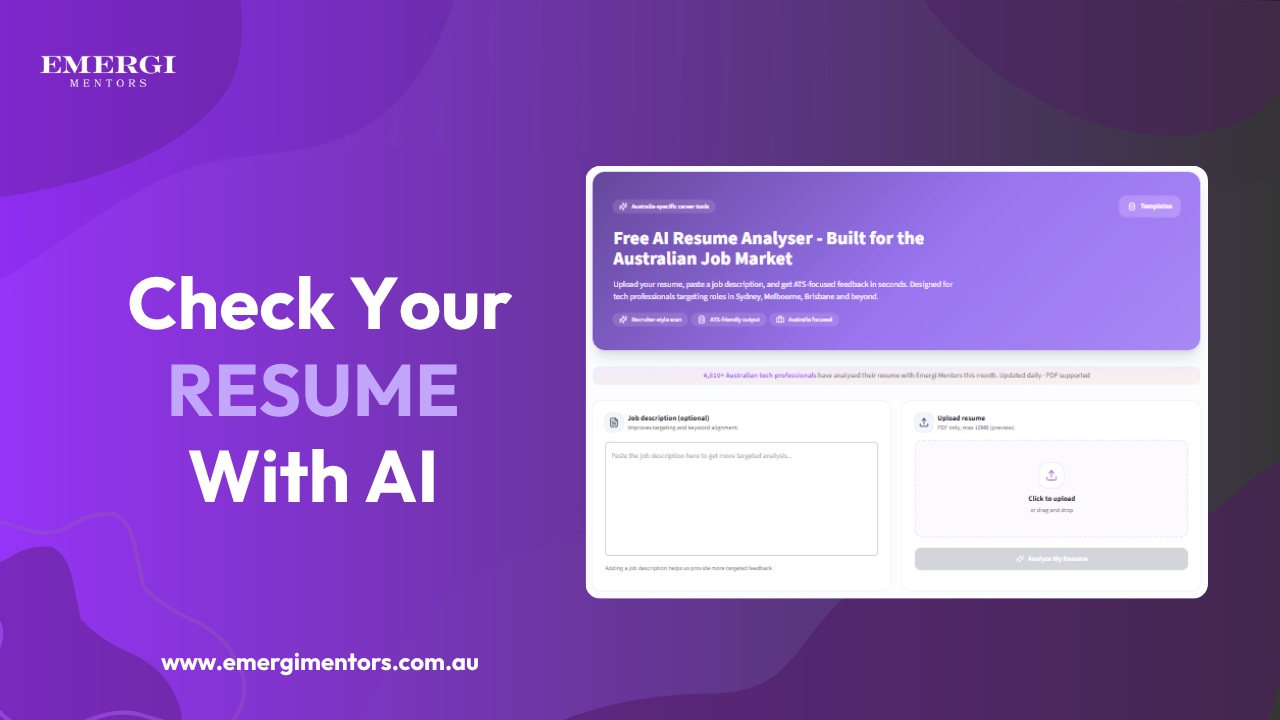
If you would rather see how an ATS checker reads your file than guess, the free Emergi Mentors Resume Analyser is one option. After you create an account, upload your resume with the job ad you are targeting and run the ATS-resume analyser to check. It flags formatting problems and missing keywords you can fix before you apply. Treat it as a first pass. It can tell you whether the file reads cleanly, but not whether you have picked the right achievements.
Which sections does an information technology resume need?
An information technology resume needs the following:
Contact details and work rights
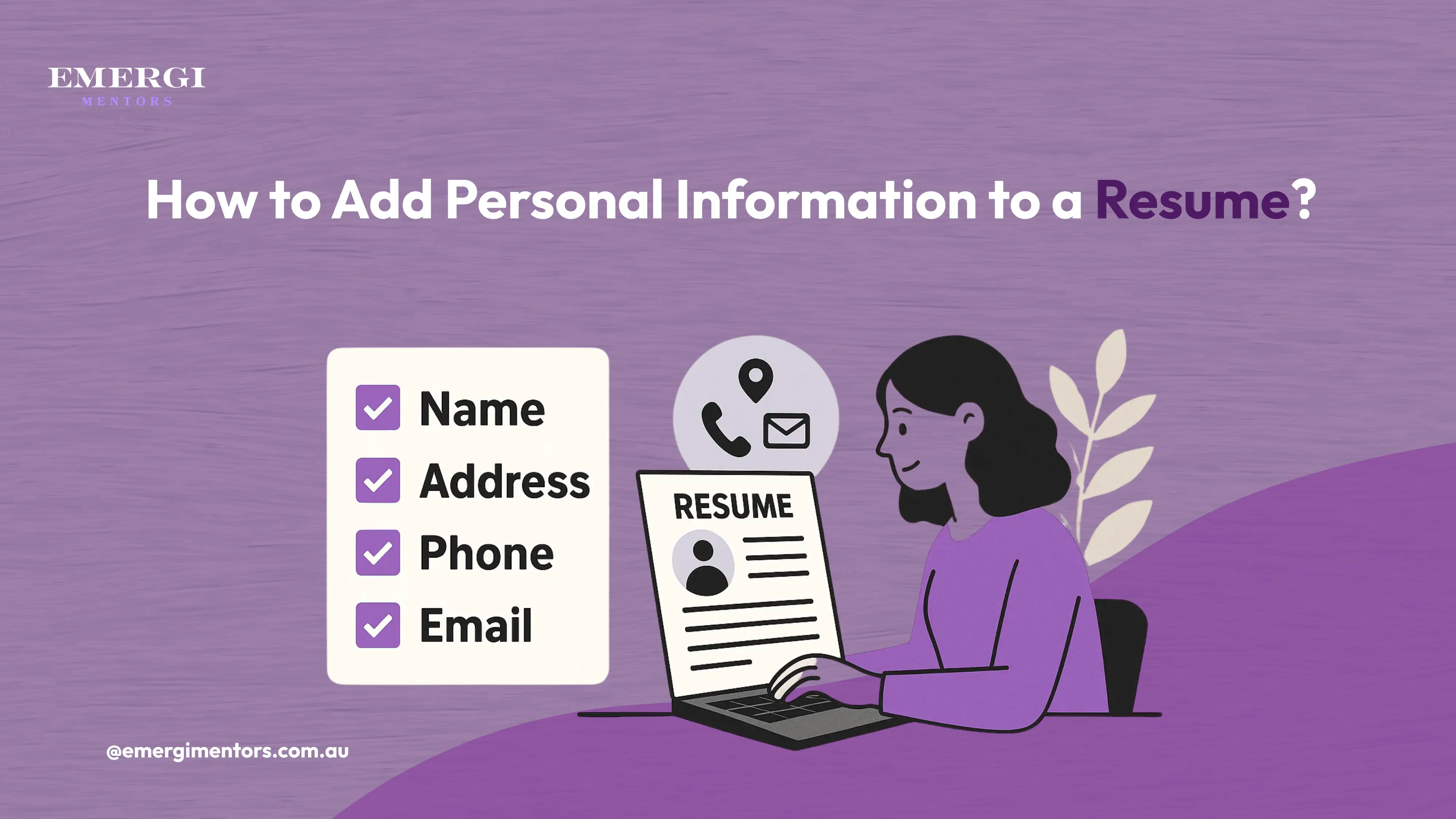
Put your name, phone number, email, LinkedIn URL and suburb and state in the body of the page, not the header. Software and web roles should add a GitHub or portfolio link, and our tech portfolio guide shows what to put behind it. Add one line on work rights, such as "Australian citizen" or "Permanent resident, full work rights", because recruiters check it early. Leave off your visa grant number, passport number, date of birth, and photo.
Professional summary
Write three to four lines covering your role, level, main technologies and one result, tailored to the job ad. The About Me section guide goes into more detail. For example:
Data engineer with four years of experience building batch and streaming pipelines on AWS. Cut a nightly ETL run from six hours to 90 minutes and built the dbt models behind weekly executive reporting. Seeking a mid-level data engineering role in Melbourne.
Technical skills
Group skills by type so a recruiter can match them to the ad in a few seconds. Use the ad's wording: if it says Amazon Web Services, write "Amazon Web Services (AWS)" once and AWS after that.
Languages: Python, SQL, TypeScript
Cloud and DevOps: AWS (S3, Lambda, EC2), Terraform, GitHub Actions
Data: PostgreSQL, dbt, Airflow, Power BI
Practices: Agile delivery, CI/CD, automated testing
List only what you could discuss in an interview. If you have used AI tools at work, describe the use. "Built an LLM-based ticket triage prototype in Python" says more than "AI-savvy".
Work experience
Give each role a title, employer, location and month-and-year dates on one line, then three to five bullets. Start with what you did, name the technology, and end with the result. The STAR method (situation, task, action, result) suits interviews and selection criteria. On a resume it compresses to action, tool and outcome.
Before: Worked on the web application and fixed bugs.
After: Rebuilt the checkout flow in React and Node.js, cutting cart abandonment by 12% over two quarters.
Before: Responsible for database performance.
After: Reduced report load times by 40% by adding indexes and rewriting the three slowest PostgreSQL queries.
When you cannot measure a result, show scale: users supported, tickets closed, servers managed or team size.
Education, certifications and projects
List each degree with the institution and year. Add certifications with the issuer and year, such as AWS Certified Solutions Architect Associate or Microsoft Azure Fundamentals, and mark anything in progress with an expected completion date. Our guide to putting certifications on a resume covers the formatting. Graduates and career changers can let a projects section, with GitHub or live demo links, carry the weight of work history. Finish with referees or note that they are available on request. The referees guide explains the Australian conventions.
How long should an IT resume be in Australia?
One to two pages suits most people. SEEK recommends one to two pages, and Indeed Australia calls one page standard for students, graduates and people with up to about 10 years of experience while accepting two or three pages when the experience justifies it. Senior specialists and government applications with selection criteria can run to three. The strict one-page rule common in the US does not apply here.
Length is a reader issue, not an ATS issue. Cut roles older than 10 to 15 years down to a line each.
What should you leave off an Australian tech resume?
Photo, date of birth, and marital status. They are not expected in Australia, and anti-discrimination law makes employers cautious about receiving them.
Skill bars, star ratings and charts. Resume analysers cannot read them, and "4 out of 5 in Python" tells a recruiter very little.
Tables, text boxes, icons and headers. These are the features most likely to scramble parsing.
An objective statement. Replace it with a summary written for the job.
Every tool you have ever touched. A list of 40 technologies buries the six that match the ad.
Hobbies with no link to the job. Open-source work or local tech meetups are the exception.
How do you adjust your resume for different IT roles?
The format is the same. What you lead with changes.
Role | Lead with | Show |
Software engineer | Languages, frameworks, GitHub link | Scale (users, requests, services), testing, release frequency |
Web developer | Front-end frameworks, live project URLs | Page performance, accessibility work, deployed projects |
Data analyst or data engineer | SQL, Python, Power BI or Tableau, pipeline tools | Data volumes, report adoption, hours saved |
Cloud and DevOps | AWS, Azure or GCP certifications, Terraform, CI/CD | Uptime, deployment frequency, cost reductions |
Cybersecurity | Certifications such as Security+ or CISSP | Essential Eight or Information Security Manual alignment, any Australian Government security clearance you hold |
IT support | Ticketing tools, ITIL 4 certification | Ticket volumes, resolution times, SLA results |
The software engineer and cloud and DevOps engineer career roadmaps list the skills employers ask for, and our data engineer resume guide shows this format applied to data roles.
Final checklist before you submit your resume
Single column, with no tables, text boxes or graphics.
Contact details and work rights in the body of the page.
Skills grouped by type and matched to the wording of the ad.
Every bullet ends with a result or a measure of scale.
Australian spelling, A4 page size and the copy-paste test passed.
File named FirstName_LastName_Resume, in the format the ad asks for.
Frequently asked questions
What is the best resume format for information technology jobs?
Reverse-chronological and single-column, with a summary and grouped technical skills above your experience. Recruiters want to see current tools first, and ATS scanners expect that order.
Should an IT resume be one page or two in Australia?
One to two pages suits most candidates. Graduates and early-career applicants can stay on one page, while senior specialists and government applicants may need three.
Is PDF or Word better for an IT resume?
Follow the instructions in the job ad. If it does not say, a Word document is the safer choice for older resume scanners, while a text-based PDF exported from Word works on most current systems. Avoid scanned or image-based PDFs.
Where can I find an information technology resume template or examples?
Start from a blank single-column Word document rather than a graphic template, because many downloadable templates use text boxes and columns that break formatting. For worked examples, see our data analyst resume examples and the Australian resume format sample.
Talk through your resume and next steps with a mentor
A clean format gets your resume read. It cannot tell you which roles to target, or whether your experience matches what Australian employers want right now. If you are applying for IT, data or software roles and not hearing back, book a free tech career strategy call with the Emergi Mentors team. You will go through your resume and target roles with a mentor and leave with a clearer idea of what to fix first.